Made in China 2025 and Industry 4.0 — Why Welding Must Be Upgraded at the Intersection of Two Strategies
- Aging welder workforce, severe shortages, difficult recruitment, rising costs — hazardous, highly polluting, high-intensity working conditions struggle to attract young talent.
- Manual welding delivers unstable quality, poor consistency, high rework rates and low efficiency, making it difficult to meet the precision and volume demands of high-end manufacturing.
- Traditional lines suffer from poor flexibility, slow changeover, data silos and high maintenance costs, unable to adapt to the rapid-iteration needs of modern factories.
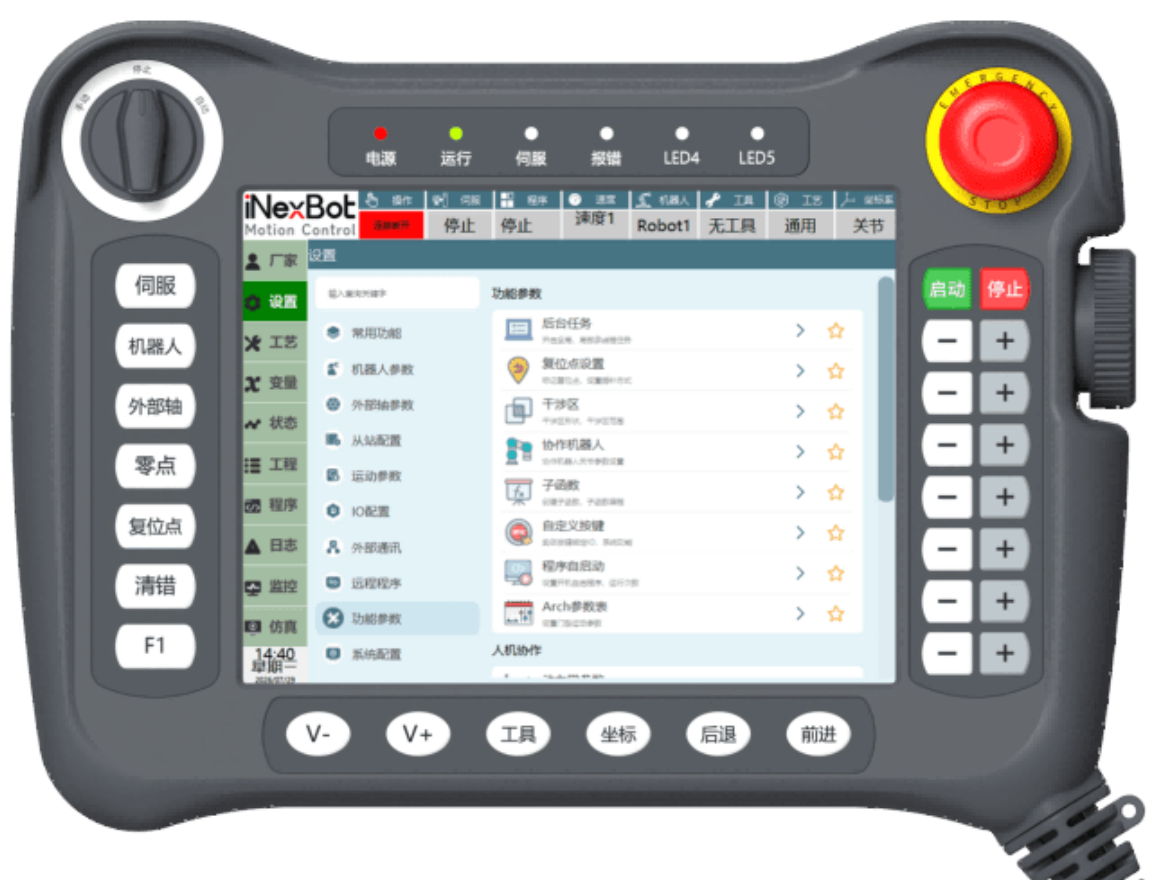
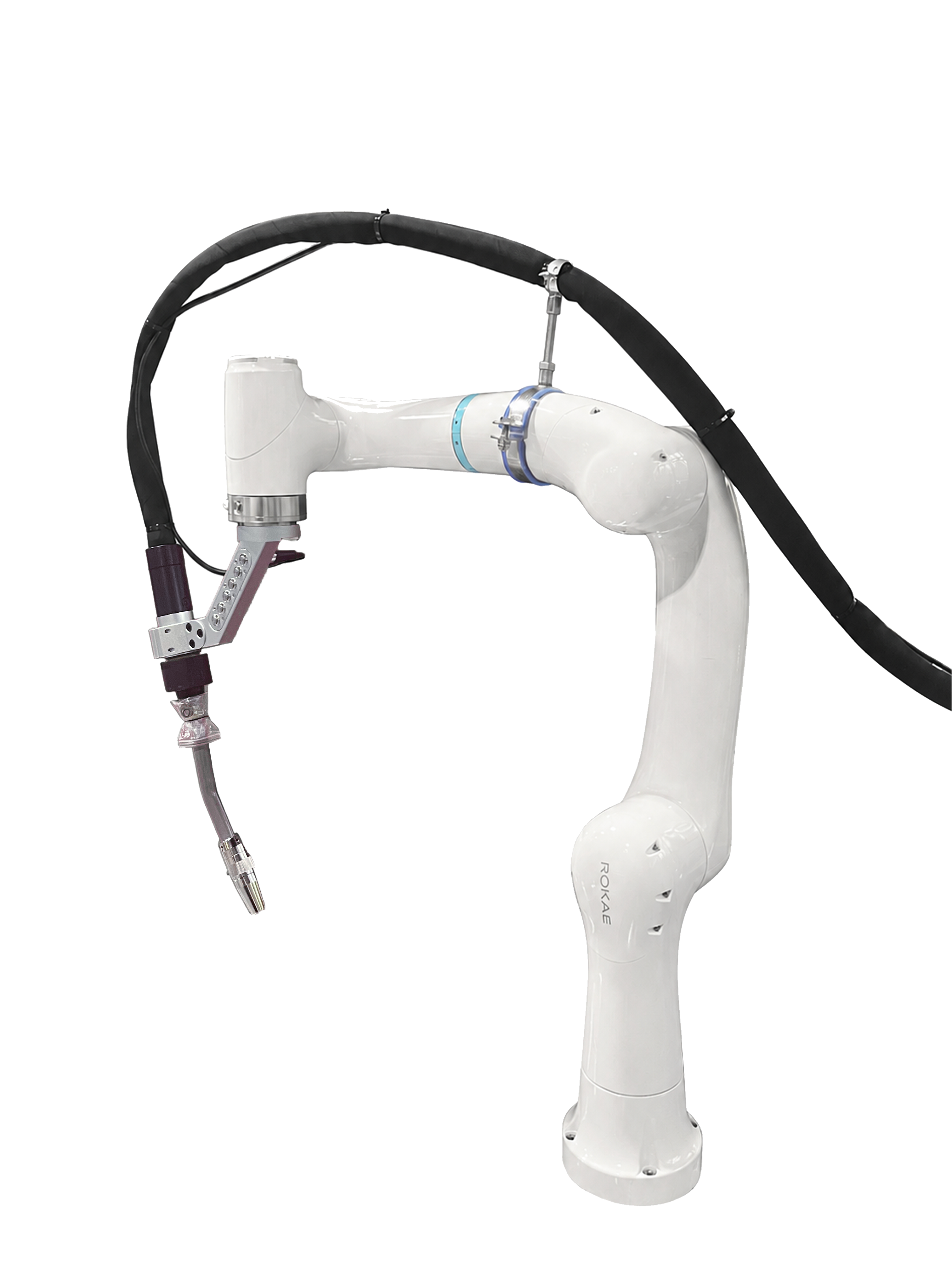
| T40 Operating System | Collaborative Robot |
|---|---|
 |  |
Welding-Process-Centric: Meeting the Needs of Different Manufacturers at Every Level
Deep Process Integration — Far More Than Pure Motion Control
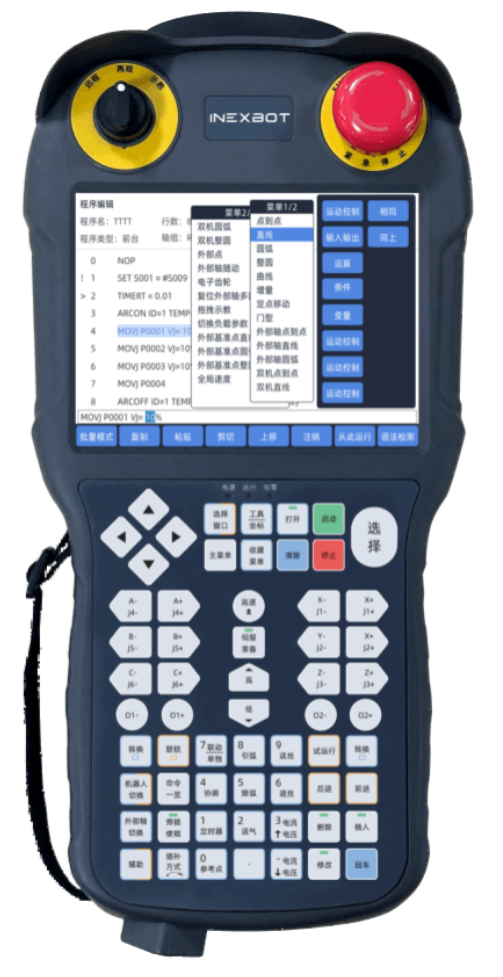
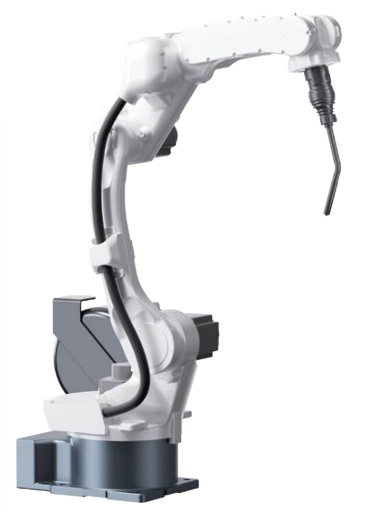
| T31 Vertical Operating System | Industrial Robot |
|---|---|
 |  |
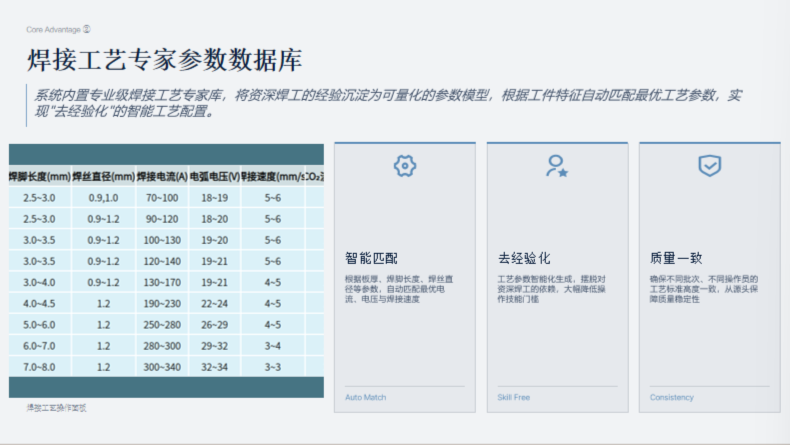
Welding Process Parameter Configuration
Users can customize welding parameters with flexible configuration and an intuitive, streamlined interface.
Suitable for welding a wide range of materials with just a few simple configuration steps.
The iNexBot control system incorporates market-proven welding processes — no separate process package purchase required; a simple configuration is all it takes to get started.
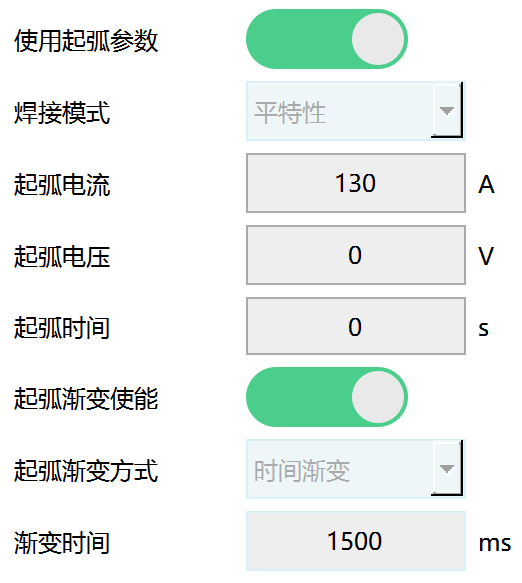
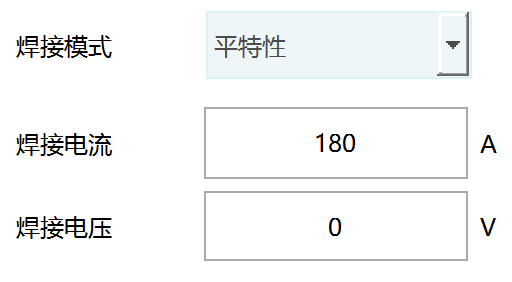
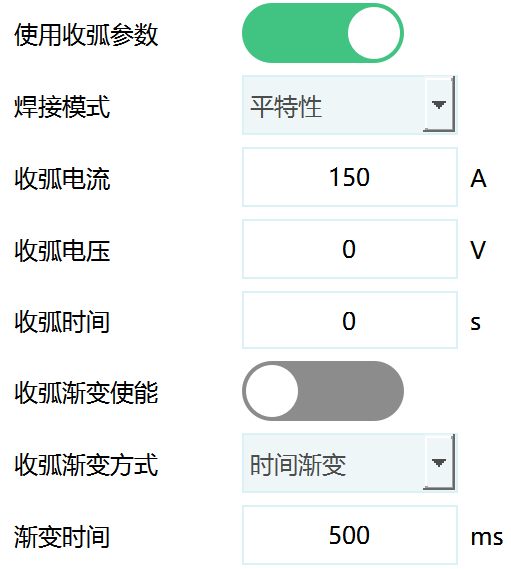
Arc Detection
Continuously acquires arc voltage and current signals for arc-start judgment and real-time arc status monitoring. Detects welding faults such as arc-start failure and mid-weld arc breakage; supports arc-sensor-based seam tracking that automatically compensates for workpiece assembly errors and corrects the torch path. Alarms and halts promptly on anomalies, reducing missed and false welds, protecting the torch assembly, lowering scrap rates, and improving process stability and pass rate.
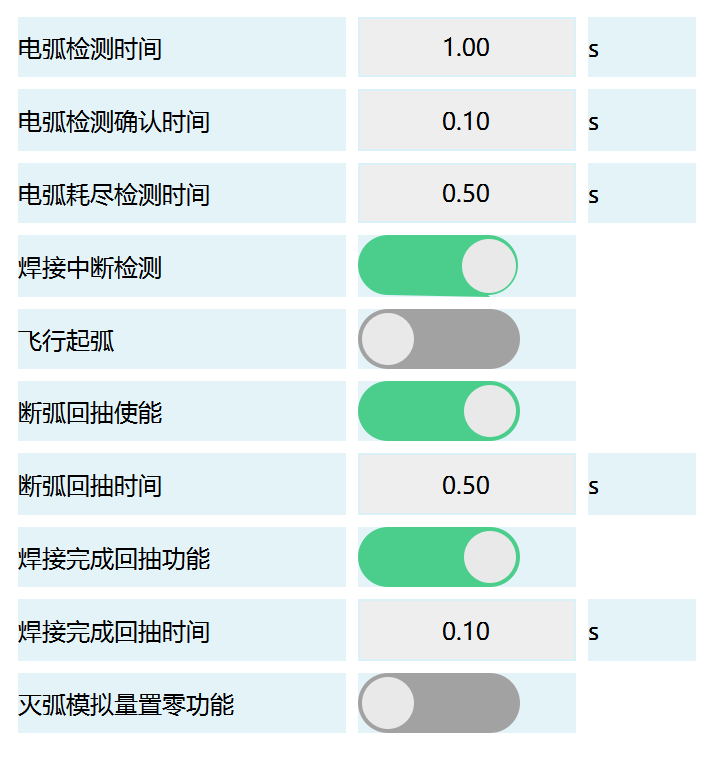
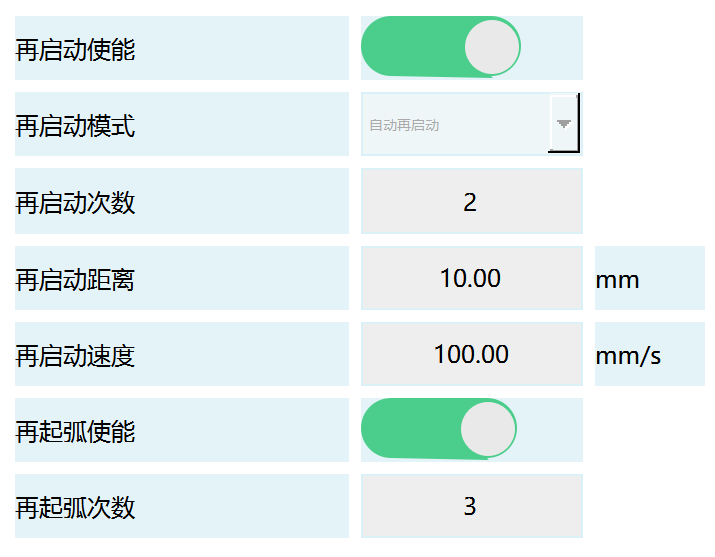
Arc Restart & Resume
Used together with arc detection: when an unexpected arc break or extinction occurs during welding, the robot precisely memorizes the weld break point and resumes without re-running the program from the beginning. After executing wire-clearing and reset motions, the torch restrikes the arc at the break point and completes the remaining weld. Multiple retries are supported, with automatic alarming when retries fail. This effectively reduces scrapped workpieces and manual rewelding, shortens fault-recovery time, ensures continuity of long welds and improves production efficiency.
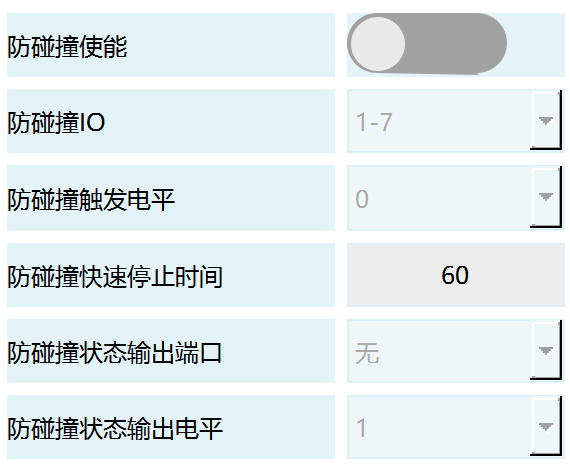
Collision Protection
Prevents robot joints, servo motors and reducers from impact damage. Reducers are expensive, vulnerable robot components — collisions can easily chip gear teeth, enlarge backlash and permanently degrade accuracy, with extremely high repair costs. Protects the welding torch, wire-feeding mechanism and torch cable: deformation of the nozzle, contact tip or torch neck from impact directly shifts the welding path and compromises weld quality; also prevents torch body tearing and feed-tube damage.
Weave Welding
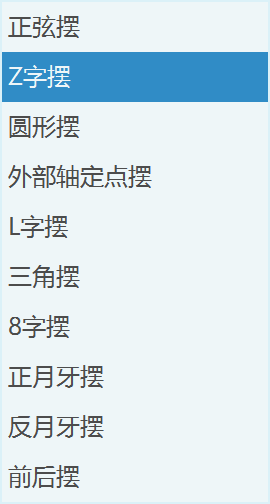
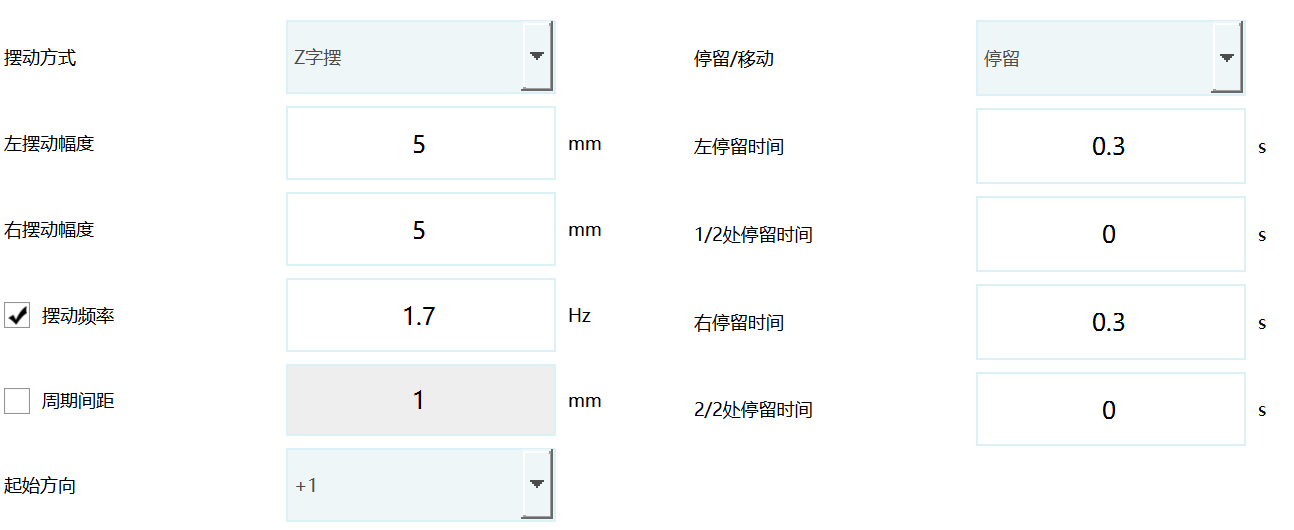
Weave welding lets operators control weld width and improve inter-pass and surface weld quality. In its 2024 update, the iNexBot control system added triangle weave, forward/reverse crescent weave, figure-eight weave and mid-path dwell functions on top of the existing sine, zigzag and circular-arc weaves, greatly diversifying the choice of welding trajectories.
| Weave welding | Weave patterns |
|---|---|
 |  |
Multi-Layer Multi-Pass Welding
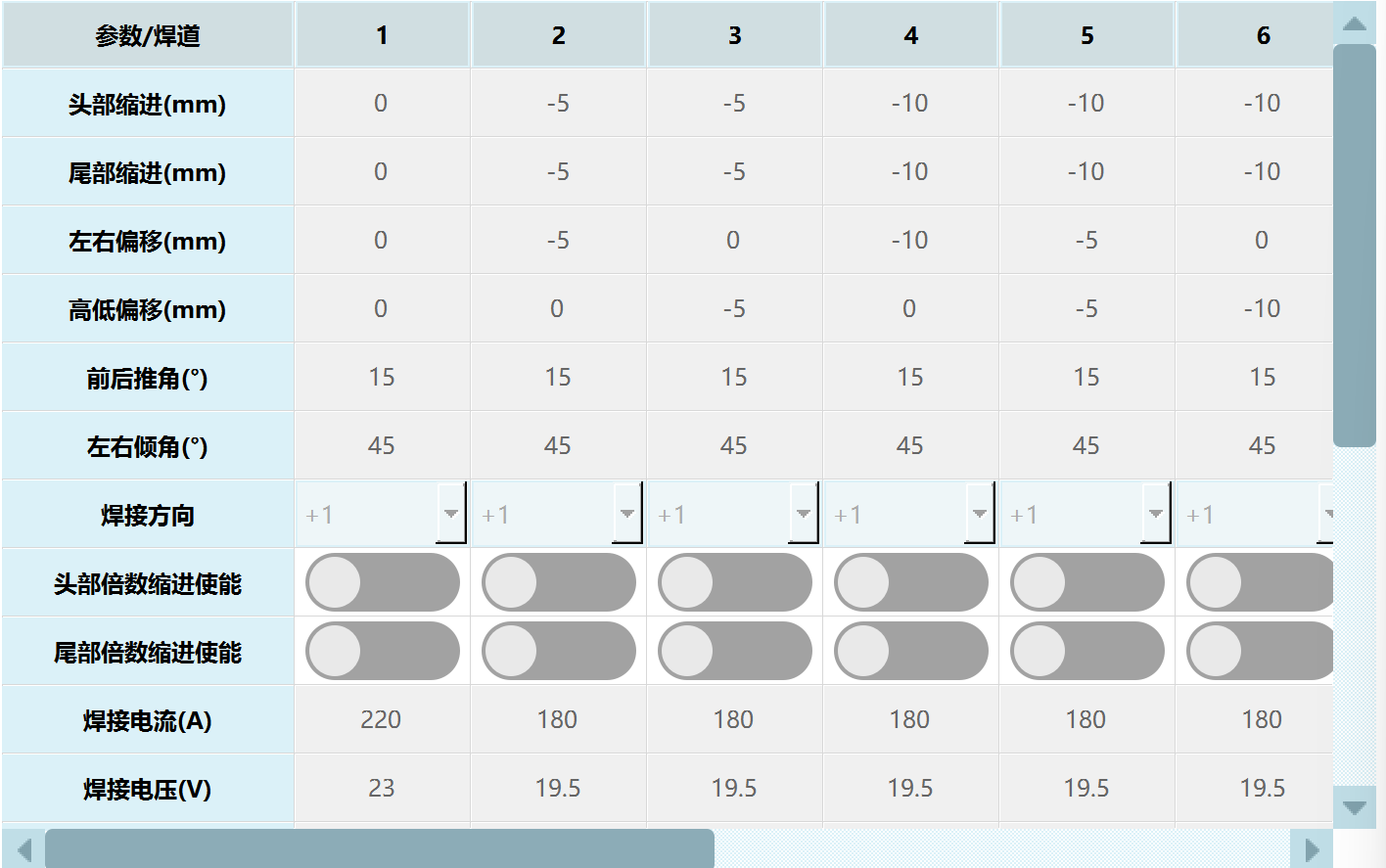
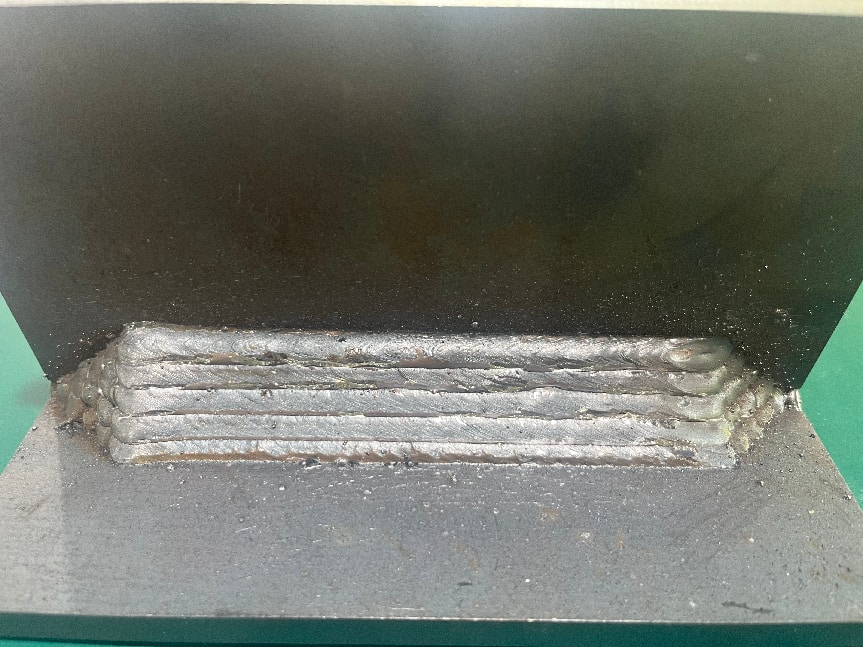
Designed for thick-plate groove welding: enter process parameters such as groove geometry, number of layers and pass offset, and the system automatically generates the complete pass sequence — root, fill and cap — with no need for manual per-pass teaching. Each layer can be configured with independent welding parameters, with automatic torch orientation and weave adjustment to suit groove side-wall fusion. Combined with arc tracking and arc restart, it dramatically reduces programming time, ensures fusion quality and consistent appearance on thick-plate welds, lowers programming complexity and improves productivity on heavy-section welding.
| Parameter interface | Result |
|---|---|
 |  |
Dual-Robot Control
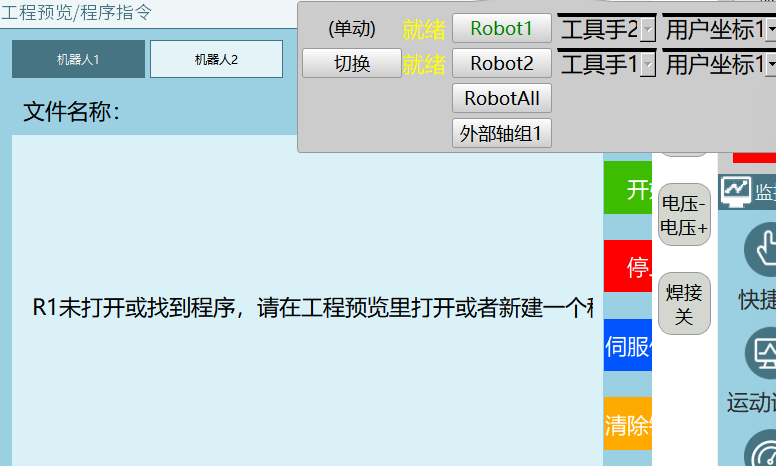
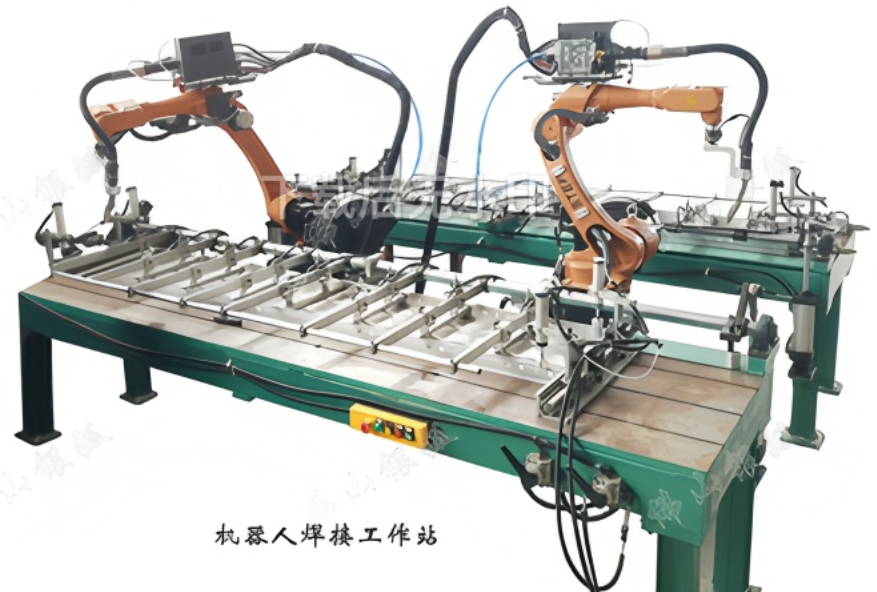
A single controller manages two welding robots in coordinated operation, supporting coordinated following, independent operation and synchronized welding modes. Provides real-time position synchronization, signal interlocking and interference protection between the robots — one robot holds and repositions the workpiece while the other welds, or both robots weld different sections simultaneously. Fully compatible with arc detection, arc restart, multi-layer multi-pass and software-based collision protection, it optimizes cycle time on large workpieces, reduces fixture investment and ensures welding efficiency and quality on large structures.
| Invocation interface | Physical setup |
|---|---|
 |  |
6 Core Advantages of the Dual-Robot Control System
1. Synchronized Coordinated Motion
One robot acts as master and the other as slave. The two robots maintain synchronized motion timing and positions — one holds and repositions the workpiece while the other welds, or both weld different sections of the workpiece simultaneously without interference. The software synchronizes position data between the two robots in real time to keep motion timing consistent.
2. Interference Protection & Workspace Monitoring
The software continuously samples the axis positions of both robots and runs built-in dual-robot spatial interference detection, monitoring the relative distances between arms, torches and cables. When a collision is imminent, it automatically decelerates and halts with an alarm, preventing the robots from striking each other and protecting the robot bodies and torches.
3. Multiple Operating Modes
- Coordinated mode: one robot holds and repositions the workpiece while the welding robot follows the workpiece orientation for synchronized welding, keeping the weld in the optimal flat position at all times for superior weld quality.
- Independent mode: the two robots operate without interference, each executing its own program to weld different areas of the workpiece in parallel, improving cycle-time efficiency.
- Linked welding mode: both robots weld simultaneously for double-sided and dual-side seam welding.
4. Program Management & Signal Interlocking
Centrally manages the programs of both robots and handles IO signal exchange between them for start, wait, interlock and process handover. Wait instructions can be configured so one robot only starts after the other completes its operation, preventing process conflicts; interlock logic prevents motion timing errors.
5. Shared Process Functions
Compatible with all core welding functions: arc detection, arc restart, multi-layer multi-pass and software-based collision protection. In coordinated operation, welding signals and fault alarms (arc-start failure, arc break, collision) are reported centrally, and both robots halt simultaneously on fault for easy troubleshooting.
6. Cycle-Time Optimization for Higher Productivity
On large workpieces, the two robots split the welding work, reducing long empty travel for a single robot. Large parts no longer need repeated clamping and flipping, reducing investment in positioner tooling and shortening production cycles.
Integrated Hardware & Software with Rich External-Device Connectivity
External Axis Support
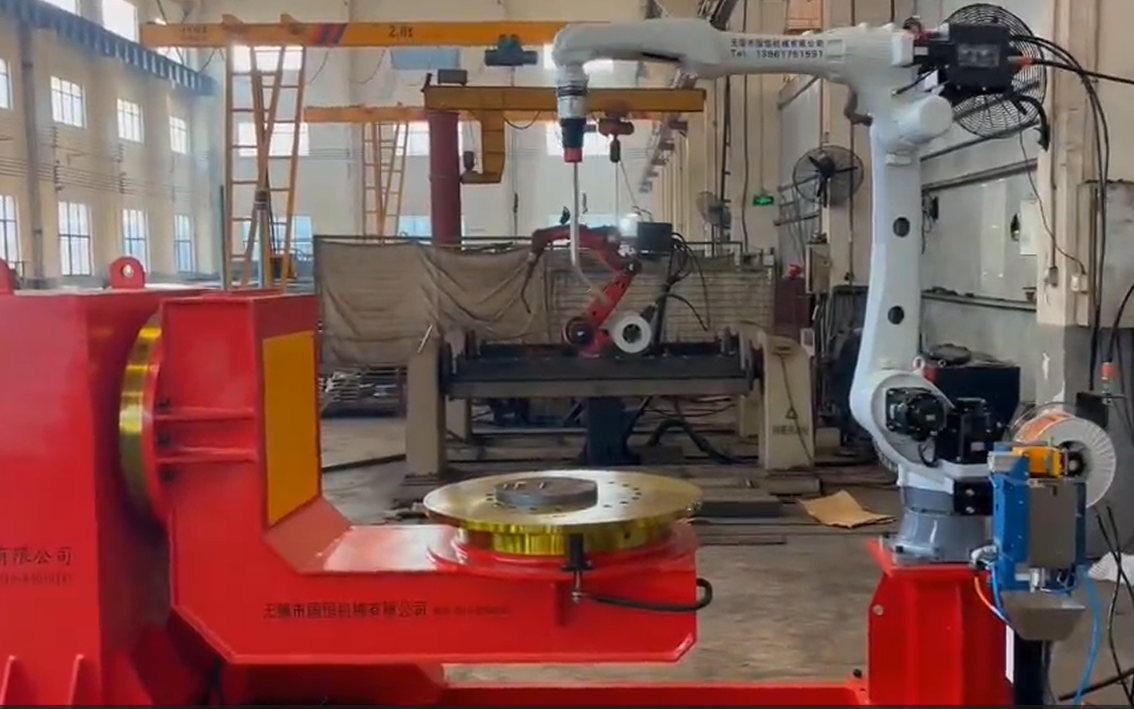
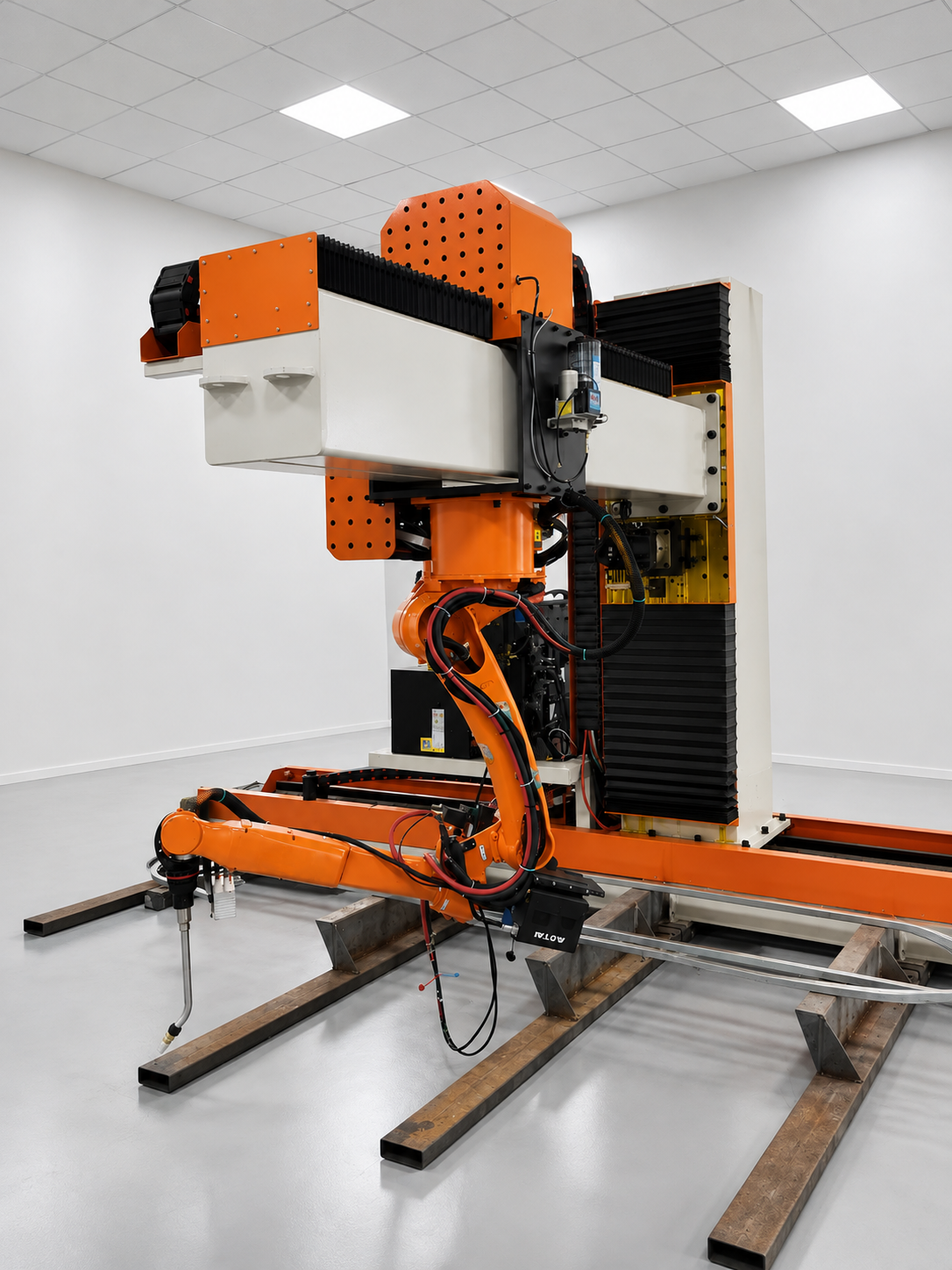
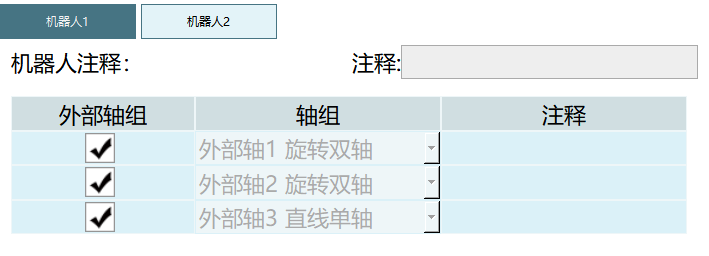
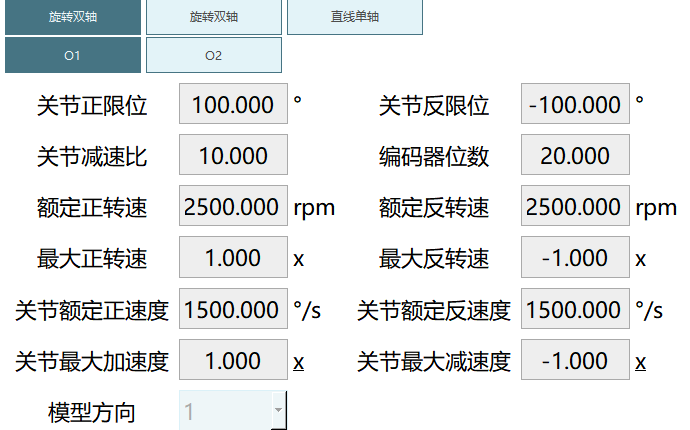
Provides integrated, coordinated control of servo-driven external axes such as positioners, rotary tables and tilt mechanisms, supporting point-to-point positioning and synchronized interpolated motion during welding. Weld seams can be repositioned in real time to ideal orientations such as flat and boat welding for better fusion. External-axis poses are integrated into the robot program for easy programming and commissioning, with over-travel protection, motion interlocking and interference prevention. Compatible with arc tracking, arc restart and other welding processes, it extends the robot's working range and raises weld quality and automation levels for circumferential seams and large structures.
| Two-axis positioner | Inverted 3-axis positioner |
|---|---|
 |  |
| External axis group | Joint parameters |
 |  |
Line-Laser Tracking & Seam Finding
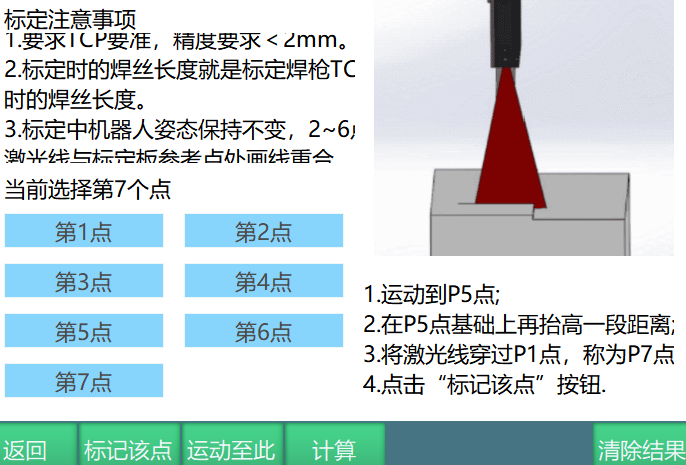
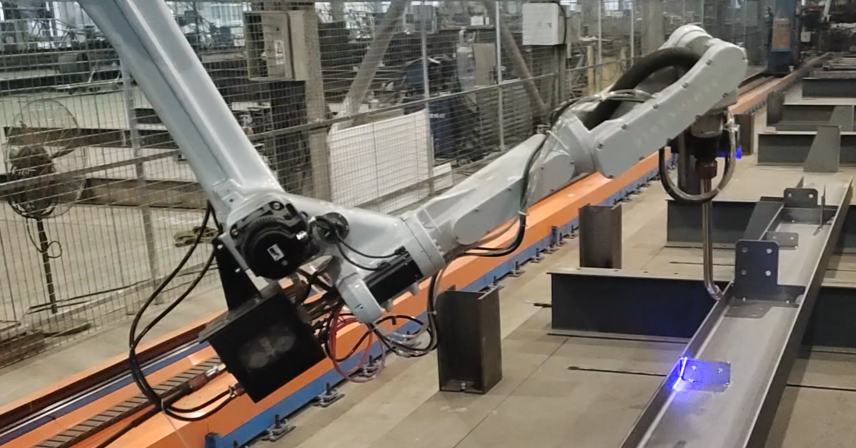
Line-laser seam tracking uses line-laser vision to scan and recognize the groove profile in real time, automatically detecting seam position, gap and misalignment, and dynamically correcting the robot's welding path to compensate for workpiece assembly, fixturing and thermal deformation errors. Supports seam finding and adaptive multi-layer multi-pass tracking, automatically adjusting weave and process parameters based on groove conditions. Effectively lowers fixture accuracy requirements and reduces defects such as missed welds, lack of fusion and burn-through. Compatible with external axes, arc restart and other functions, it improves welding consistency on thick plates and complex structures while reducing programming difficulty and scrap rates.
| Line-laser calibration | Line-laser application |
|---|---|
 |  |
Digital Communication with Welding Power Sources
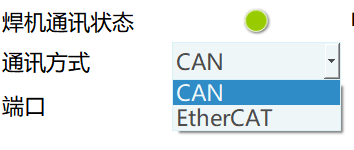
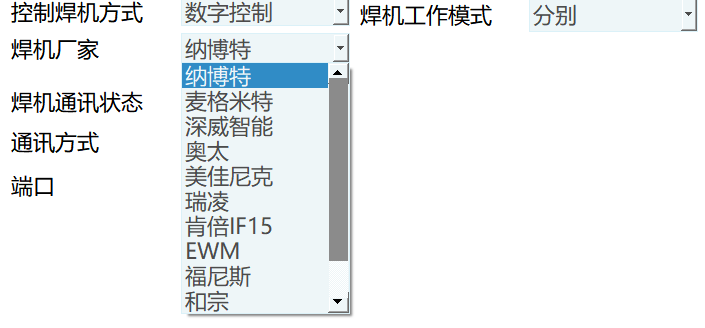
Bus-based high-speed digital communication between the robot controller and the welding power source replaces traditional analog wiring. The robot directly issues the full set of welding parameters — current, voltage, arc start/stop — and reads back actual welding data and fault information in real time. Immune to on-site electromagnetic interference and analog signal drift, it keeps process parameters precise and stable. Supports process-library recall and works in concert with arc detection, arc restart, line-laser tracking and multi-layer multi-pass; all faults are reported centrally to the teach pendant, simplifying commissioning and maintenance while ensuring consistent quality across production batches.
| Communication method | Communication partners |
|---|---|
 |  |
Open & Interconnected: Built for Smart Manufacturing
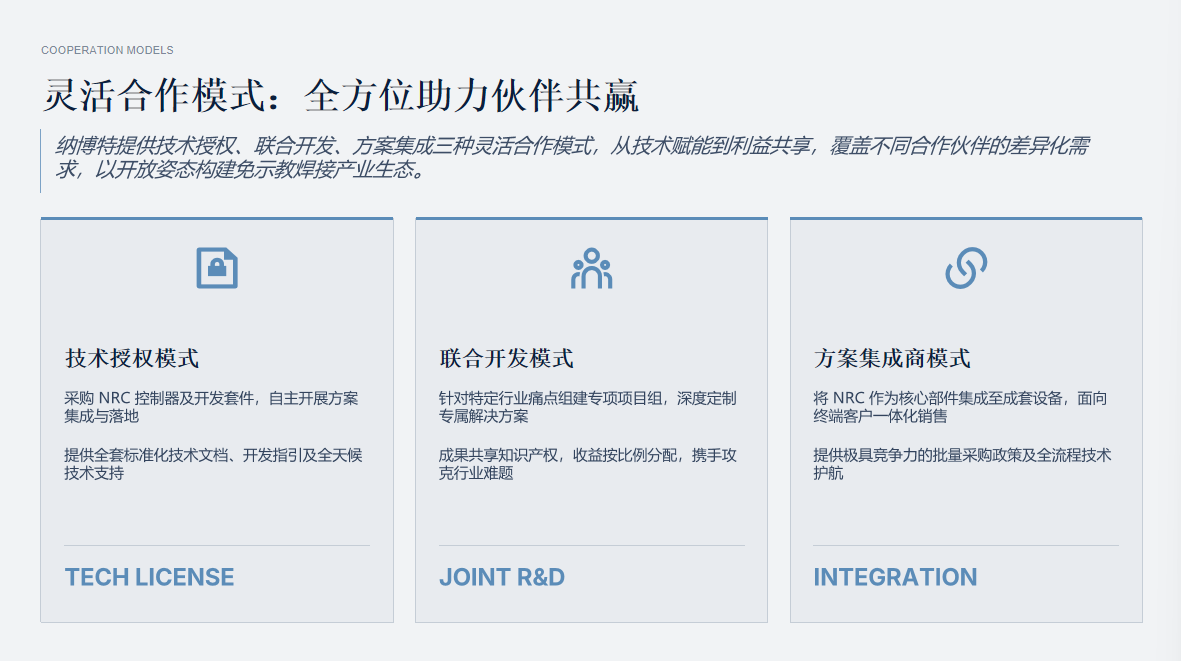
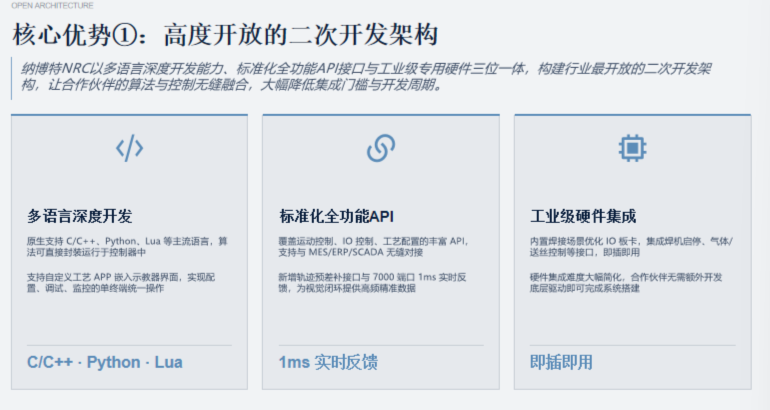
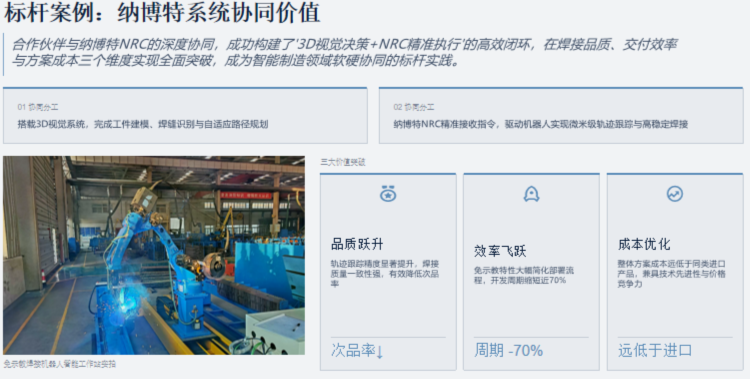
An open, interconnected architecture based on standardized interfaces such as OPC-UA connects robots, welding machines, vision systems and PLCs with MES and industrial platforms. Supports device-coordinated control, full welding-data collection and traceability, remote work-order dispatch, remote maintenance and secondary development, breaking down traditional information silos. Compatible with a full range of intelligent process functions and suited to flexible mixed-model production, it helps welding lines join the smart-manufacturing ecosystem with transparent production and digitalized management.
| Mutual value | Highly open |
|---|---|
 |  |
| Parameterized support | Collaborative value |
 |  |
- Supports digital twins, delivering welding trajectories simulated offline directly to the robot controller;
- Supports secondary development, enabling integrators to build customized welding functions for customer-specific conditions;
- Supports industrial Ethernet for upstream connection to MES and production management systems, collecting welding current, voltage, time and fault data for production monitoring and process traceability.
Application Scenarios
| Light Hardware Welding | Medium & Thick Plate Welding | Collaborative Welding | Customized Welding |
|---|---|---|---|