27 Steel Plates Cut per Day, Industry-First Bulb Flat Steel Cutting — iNexBot Laser Cutting System Sets Two Industry Firsts at Dongfang Heavy Industry
That number is taped to the whiteboard in Dongfang Heavy Industry's cutting workshop, right next to the crossed-out "10".
From 10 to 27 steel plates a day — more than double the output. For reference, the typical daily cutting volume for 12 mm thick carbon steel plates in the industry is around 12 to 13 plates.
But 27 isn't the point of this story. The point is how it got there — built from instant noodles, burnt-through lenses, heavy colds, and days that ran until ten o'clock at night.
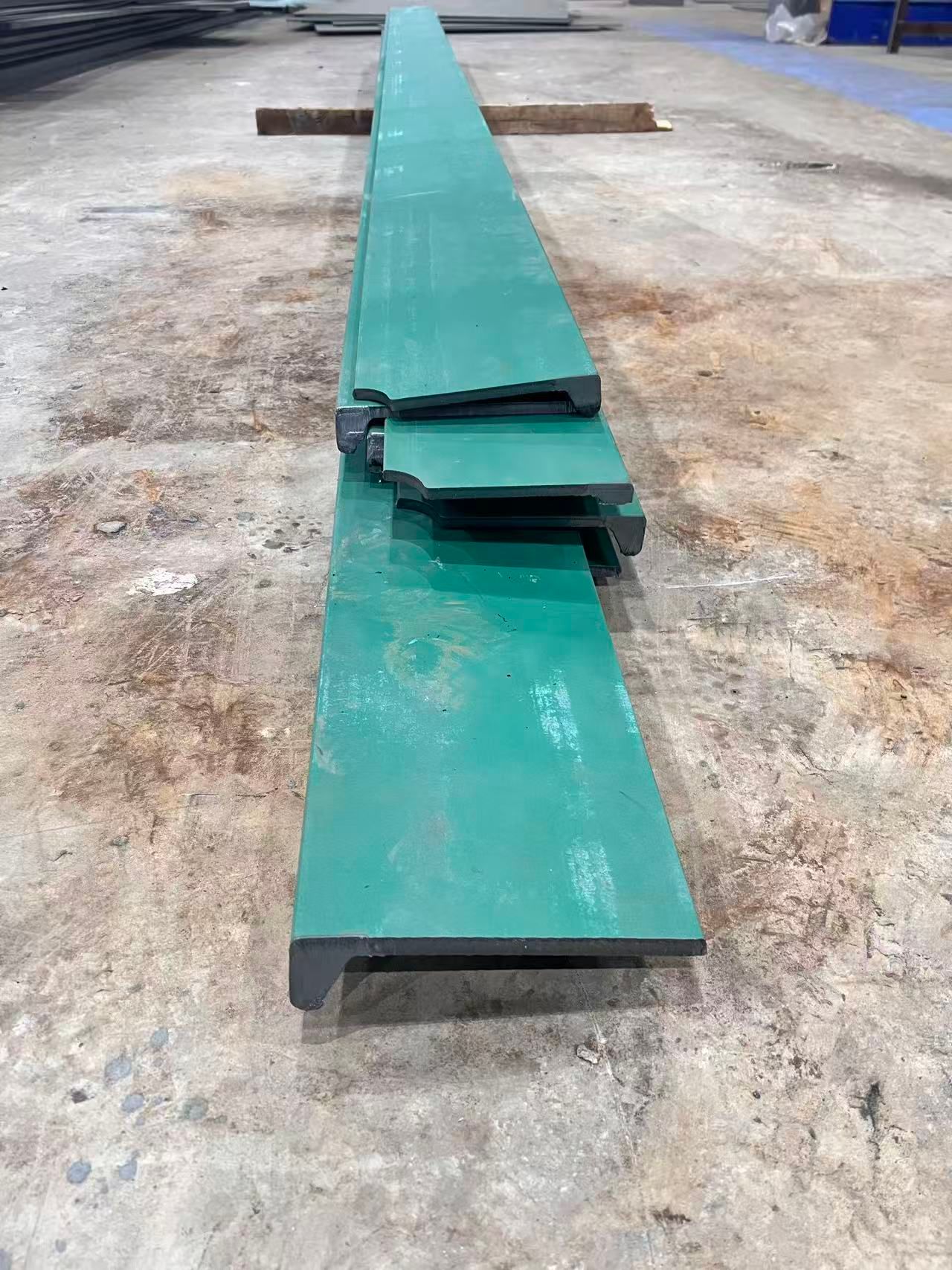
The 10,000-Watt "Beast" Bears Down
The equipment had just arrived, and commissioning pressure was high.
When the team got to the site, the bulb flat steel wasn't ready yet, so the customer first asked them to cut flat plates. The requirement for cutting bulb flat steel sounded plain enough — "as long as it's faster than cutting by hand."
It didn't sound like a high bar. But once they actually got down to work, they found that "fast" was a minefield.
The air compressor was too far from the cutting station, so air pressure couldn't build up. The filter was also malfunctioning, letting impurities into the air line. The result: dozens of lenses burned out per day. Laser cutting focusing lenses aren't cheap — each one lost was gone for good, and replacements soon burned out again.
Alongside commissioning, they also had to train operators hands-on — no matter how advanced the equipment, the person pressing the buttons is still a person.
During that period, the project team worked overtime until ten every night and gave up their weekends. There was no proper lunch in the workshop, so when hungry they ate instant noodles. "Every day we only had one proper meal — dinner" — said flatly, as if commenting on the weather.
It was also the change of seasons, and colds kept coming back. Even with a heavy cold there was no rest — they kept working through the fever. The wind in the workshop mixed with the smoke and dust from cutting, and their throats never fully recovered. During the interview, the project team members' voices were still hoarse — the job was done, but their voices hadn't recovered yet.
From 10 to 27 Plates: Not One Switch, but Countless Screws
There was no dramatic "aha moment" in raising the daily cutting volume from 10 to 27 plates.
The gantry frame itself has stability limits, so speed couldn't simply be maxed out — push it too hard and the frame shakes, and cut quality falls apart. So what did they do? Slowed down acceleration and deceleration, and extended the constant-speed segments. Marking and scribing speed went up, while cutting speed stayed the same.
It sounds too plain to be called technological innovation. But it's all experience: when to go fast, when to go slow, how each parameter works with the others — these make up the process library the project team built up trip after trip to project sites in Suqian and Xinjiang.
Without that process library, there would be no 27.
The bulb flat steel work didn't officially start until after the May Day holiday.
When the first qualified bulb flat steel finally came off the line, the workshop didn't erupt in cheers. There was just a long exhale — then on to tuning the next parameter.
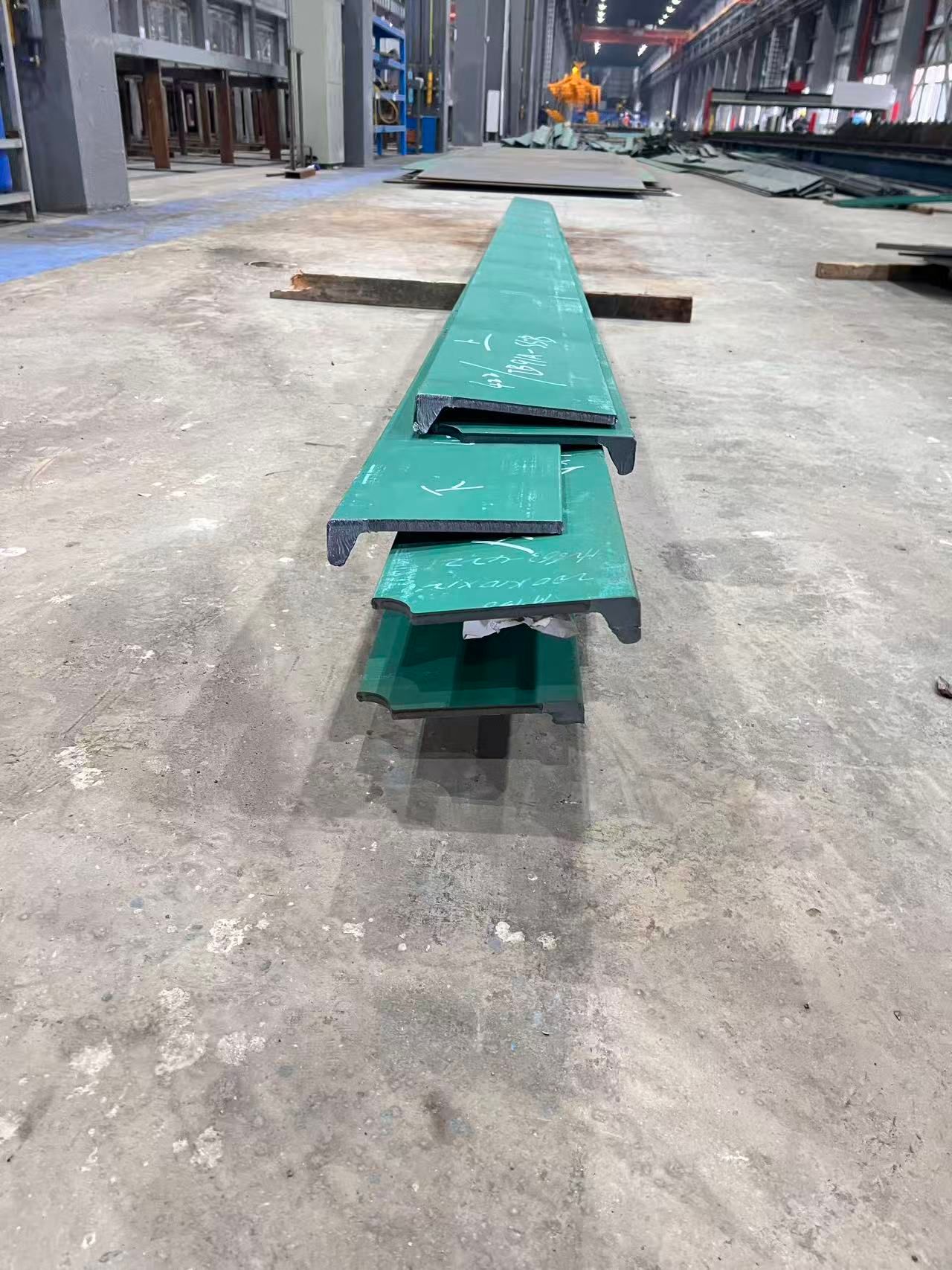
Industry First: Why Had Nobody Cut Bulb Flat Steel Before?
Bulb flat steel is a special steel section used in shipbuilding. Its cross-section looks like an "L" with a rounded head — a bulb plus a web, asymmetric. And that asymmetry concentrates every problem into one piece.
Obstacle one: the focus won't line up. The bulb is a curved surface while the web is flat, and the height difference between them is large. An ordinary flat-cutting head can only focus at a single height, so when cutting the bulb the focus drifts — leading to incomplete cuts, slag adhesion, and skewed cross-sections.
Obstacle two: the laser gets reflected back. The bulb's curved surface acts like a curved mirror, reflecting the laser back — losing energy and easily burning the lens or causing localized over-burning. There are also shadow zones where the web transitions to the bulb, where the cut breaks off mid-way.
Obstacle three: 3D trajectories. Cutting flat plates is 2D; cutting bulb flat steel requires bevels, end faces and holes, with five-axis coordinated motion — more than doubling path-planning complexity.
Obstacle four: slag can't be cleared. The bottom of the bulb is a semi-enclosed space where assist gas can't reach, so molten slag accumulates inside. The bottom ends up covered in slag lumps, the cross-section is rough, and post-processing costs are alarmingly high.
Obstacle five: a 12-meter "spring". A single piece of bulb flat steel is often 12 meters long; after transport and storage it arrives bent, twisted and bowed in every direction. Traditional positioning can't keep up — dimensional deviation and cutting offset are the norm. The asymmetric cross-section is also hard to clamp: clamp too tight and you damage the bulb; too loose and the web hangs unsupported, vibrating badly during cutting.
The parameter window is also extremely narrow: the bulb and web differ in thickness, angle and material response. The bulb is thicker than the web, so the same laser beam burns through the thin part while failing to penetrate the thick part. This requires the power to ramp during the cut — increase power over the bulb, pull it back over the web, so that power transitions smoothly like a ramp along the path rather than staying at one setting from start to finish. Cut with a single parameter set and one side will just penetrate while the other is already burned through.
So it wasn't that nobody had thought of it before — it's that these five obstacles stack on top of each other, and each one alone was enough to sink a project.
iNexBot's system worked through each of these five obstacles one by one. From positioning and recognition to focus tracking, from path planning to slag-clearing process, every link was refined through repeated trial and error. There was no silver bullet, no single winning trick — just layer upon layer of solid engineering.
What Did the Customer Say?
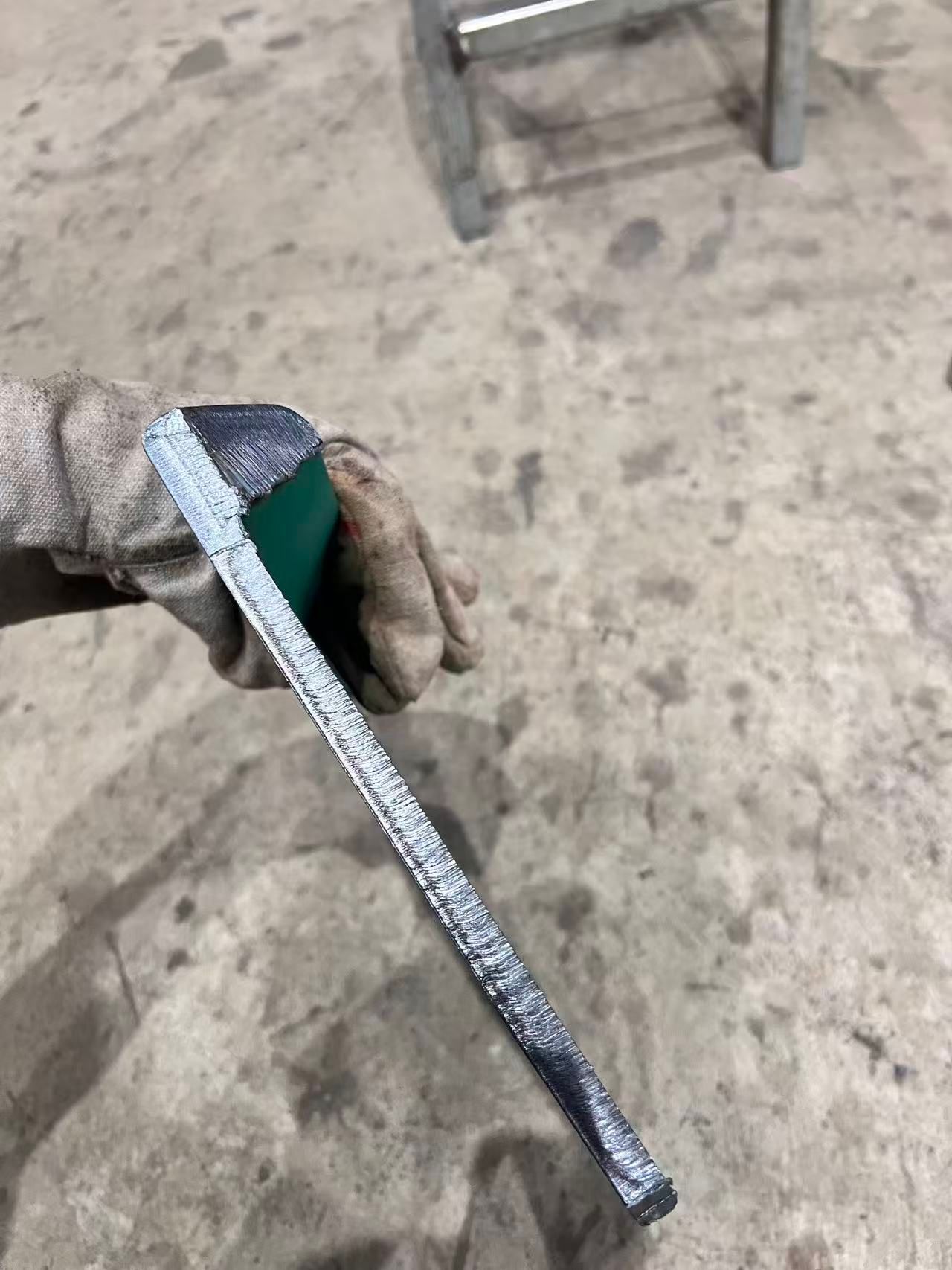
The customer's verdict on the cutting quality was, in their own words — "nothing to fault."
Plates from 9 mm to 12 mm thick were all cut, and small and large parts (25, 35, 40) were all run. The customer's assessment of cut quality was direct: good is good, and there's nothing more to say.
After the bulb flat steel cutting solution went live, Dongfang Heavy Industry gave it high praise. That's not a courtesy — in a process long dependent on manual gas cutting and flame cutting, being the first to use a laser to produce qualified bevels and cross-sections on bulb flat steel means, in itself, that both efficiency and safety on that line are moving upward.
After the 27 Plates
From 10 to 27 plates, from "just faster than hand cutting" to the industry's first laser-cut bulb flat steel — the Dongfang Heavy Industry project didn't happen overnight.
It happened in lens after burnt-out lens, on the walks back to the dorm after shutting down the equipment at ten each night, in the steam rising from that bowl of instant noodles at lunch, and in the afternoons spent tuning parameters wrapped in a coat while fighting a heavy cold.
iNexBot's control system is the "brain" of this solution, but what really got that brain running on the shop floor were the people willing to stay on site and grind out parameter after parameter.
Technology, in the end, serves people. The 27-plate record will be broken, and bulb flat steel cutting will keep improving. But the days spent crouched on the workshop floor won't be wasted — they've already become every parameter in the process library, every detour saved in the next commissioning, and faster delivery at the next customer site.
That is "Complex Motion, Made Simple" at its most unadorned.