Since its founding in 2015, iNexBot has upheld the principles of “innovation, trust, and openness,” committed to providing efficient, stable control system solutions to customers worldwide.
Over eight years of deep cultivation, we have witnessed iNexBot grow from its base in Nanjing to the establishment of R&D centers in Suzhou and Dongguan, with cumulative sales exceeding 20,000 units and successful entry into international markets. Over these eight years, iNexBot has not only achieved fruitful results in product R&D but has also earned an excellent reputation in the industry.
iNexBot Control System Launch Event Held Successfully
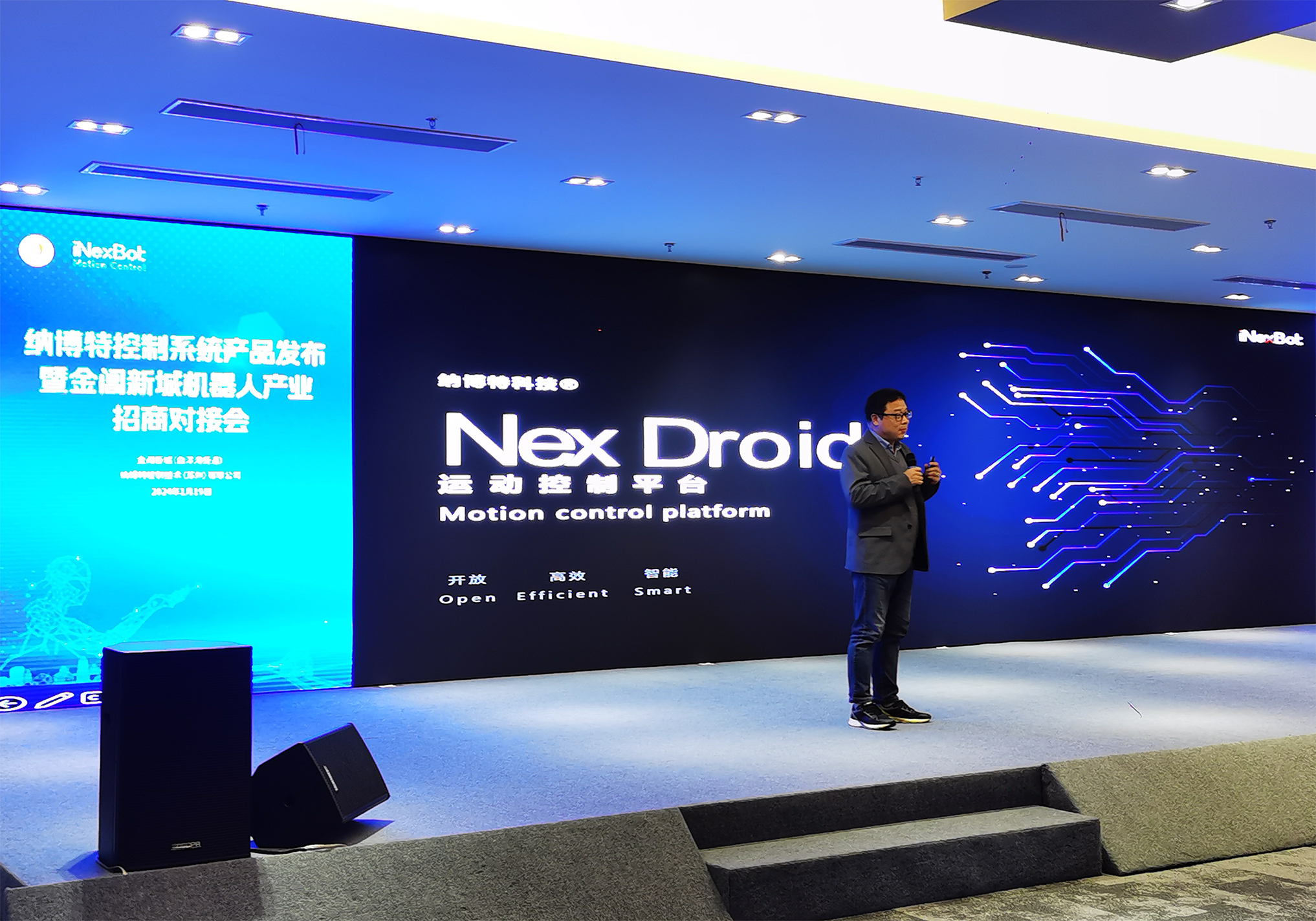
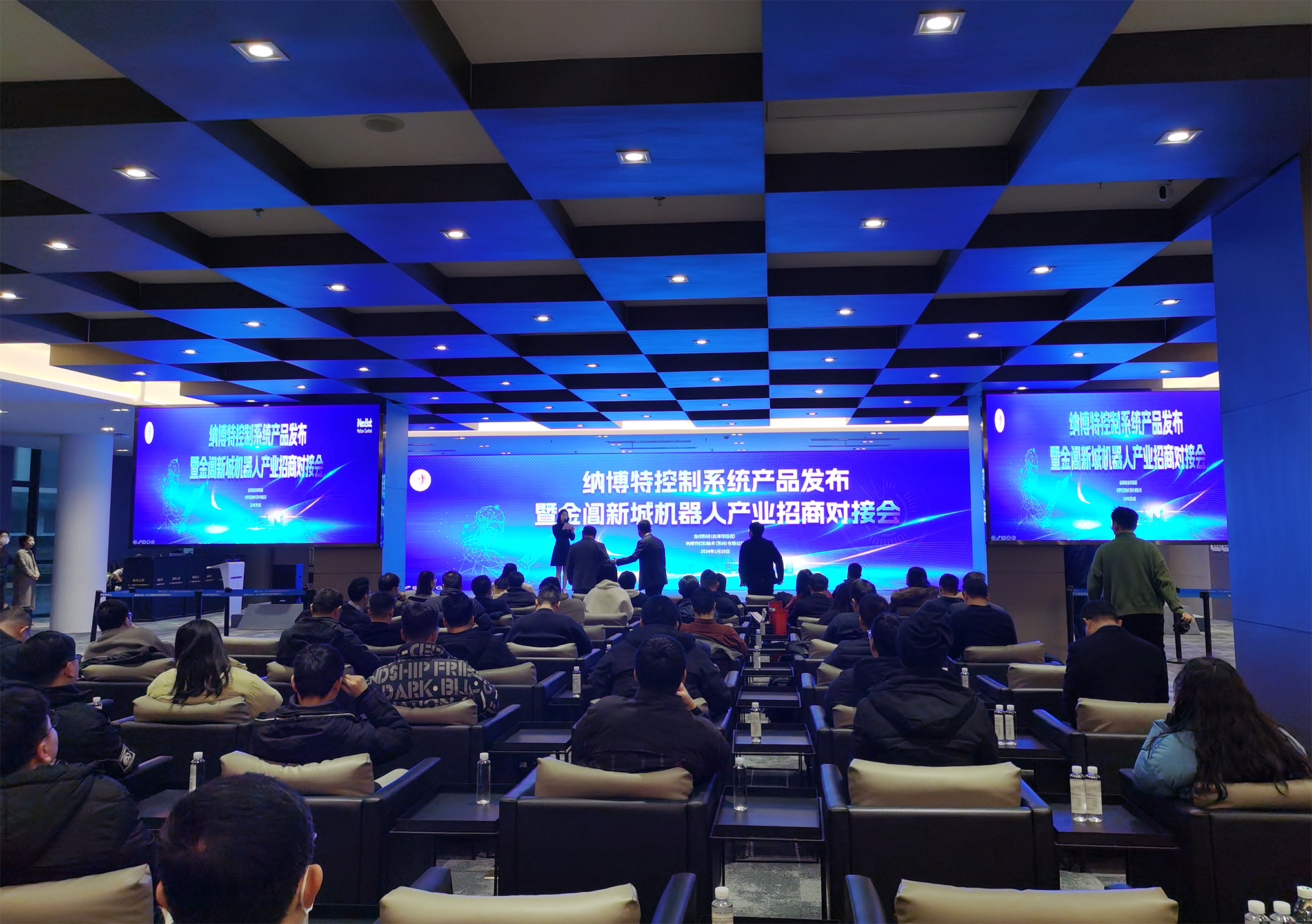
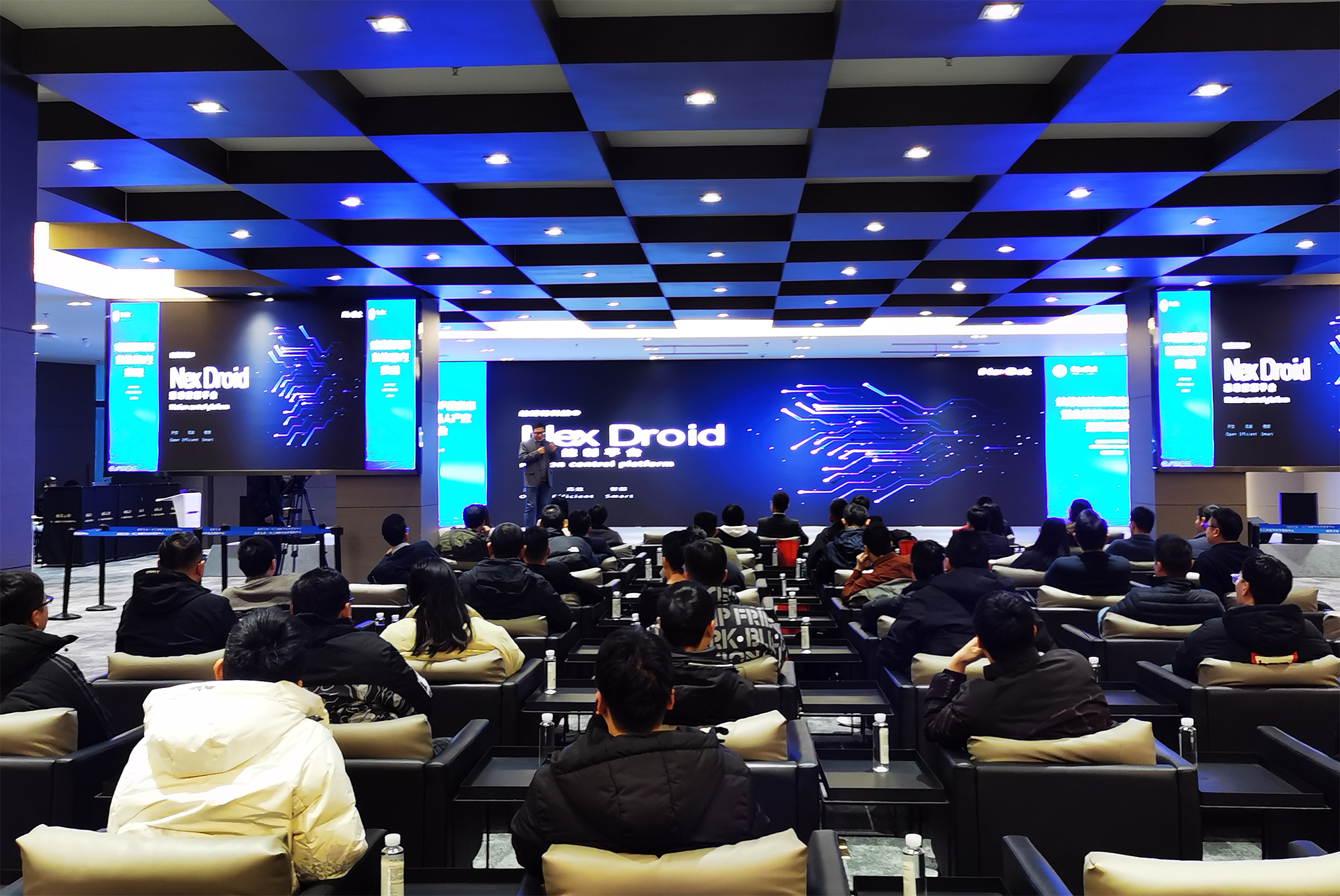
On January 19, 2024, iNexBot Technology held its control system launch event in Suzhou, China, where we reviewed eight years of iNexBot's development journey and outlined our plans for 2024.
What Has iNexBot Accomplished Over the Past Eight Years?
Algorithms:
- We built the industry's most comprehensive robot algorithm library, covering dozens of robot configurations;
- We turned kinematics, dynamics, and interpolation into open interfaces that users can implement themselves, perfectly protecting commercial confidentiality;
- The dynamics engine supports any robot model, load identification, high-sensitivity drag teaching and collision detection, and soft floating;
Secondary Development Platform:
- Supports multiple scripting languages including Python and Lua, making it easy to learn and use;
- Provides a language pack module that integrators can translate into any language, facilitating expansion into overseas markets;
- Provides a Chinese programming language;
- Provides data access interfaces;
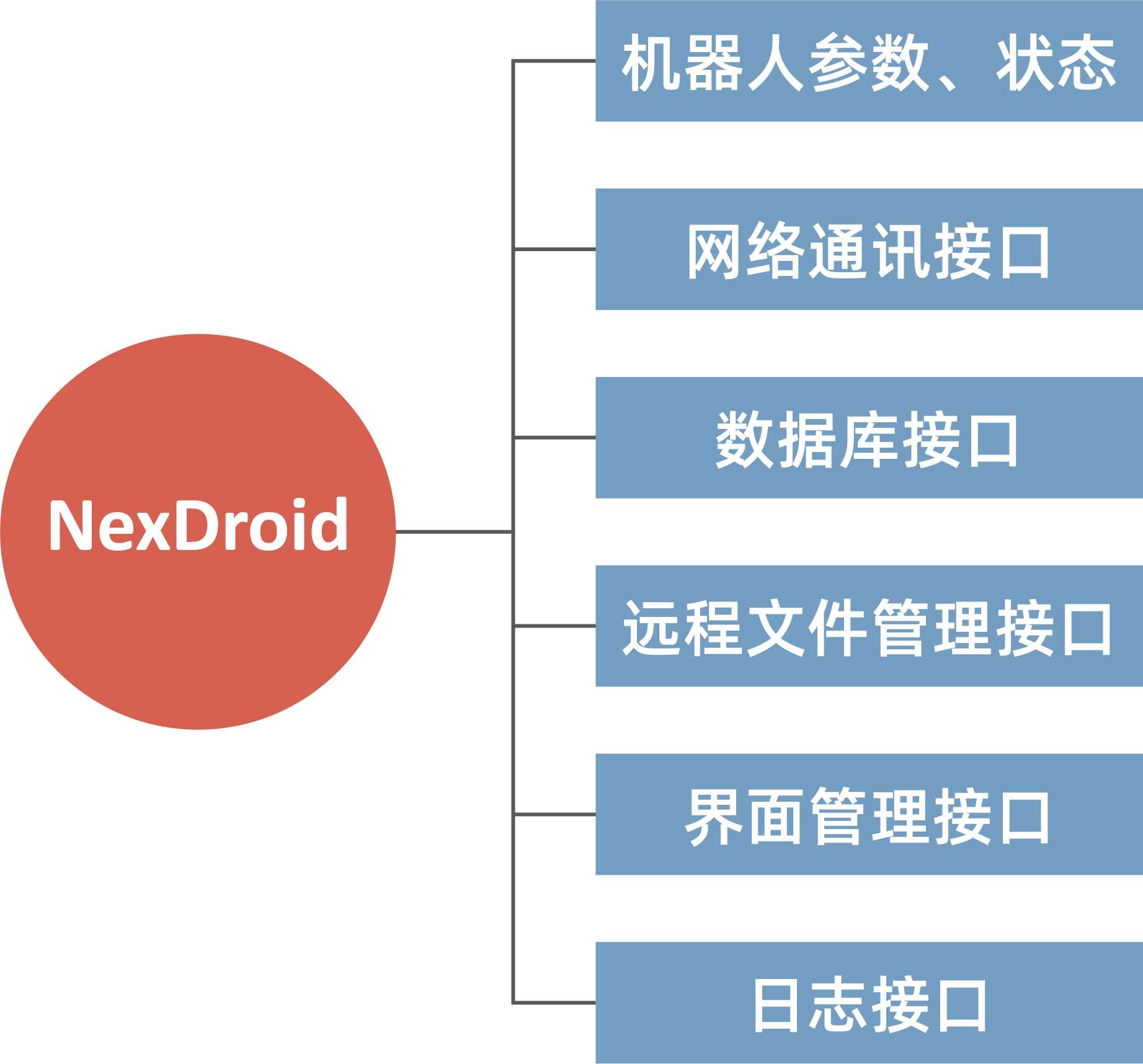
- Supports multiple clients connecting to the controller simultaneously for multi-terminal operation and monitoring, making it easy to remotely monitor device status from the cloud.
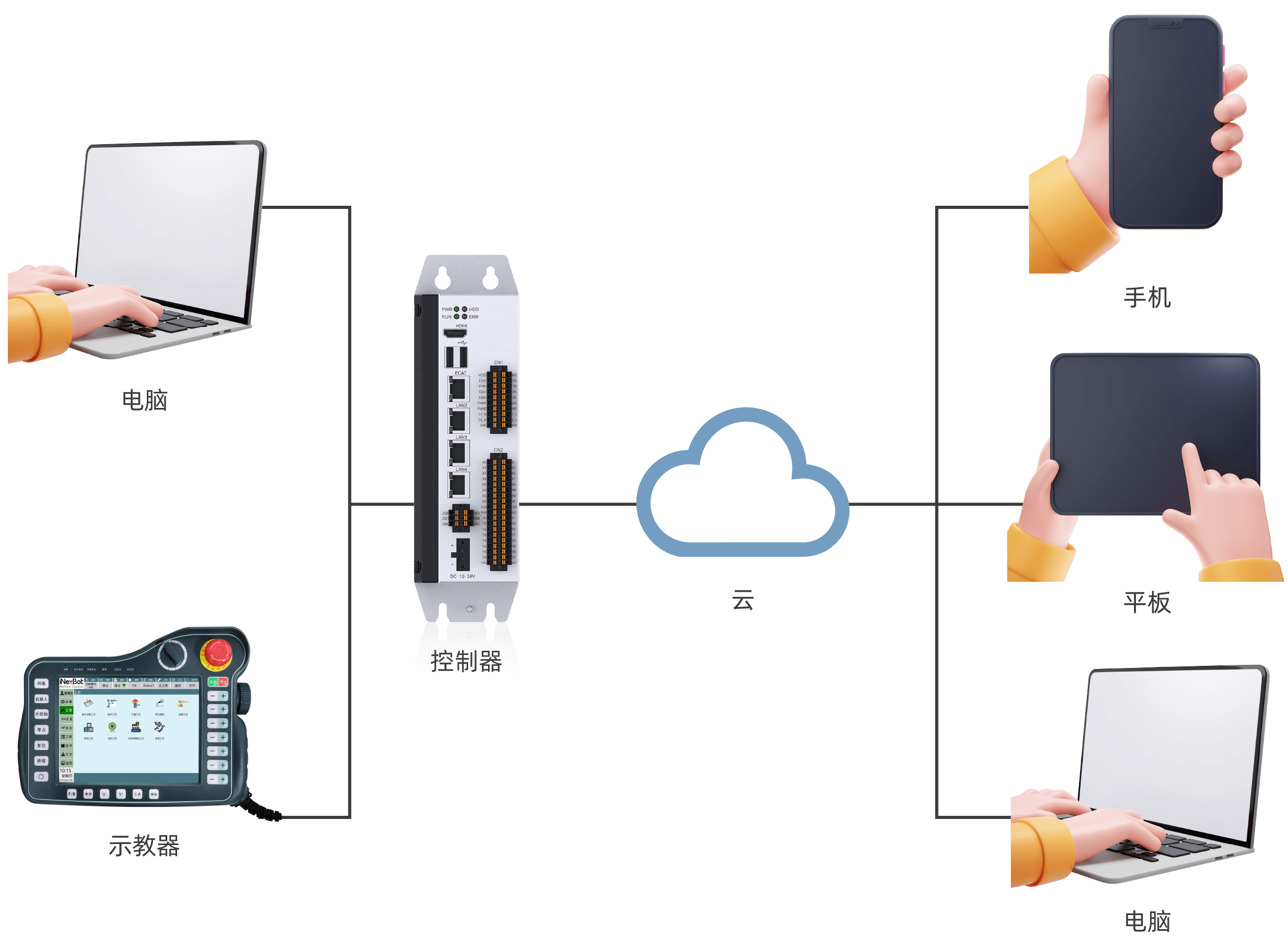
Process Platform:
We built the industry's richest process library, covering arc welding, spot welding, palletizing, stamping, spray painting, machine tending, engraving, and more.
Communication Protocols:
The iNexBot control system is compatible with the widest range of communication protocols
- Bridges IT and OT systems based on OPC-UA
- EtherCAT (ETG member)
- CAN/CANopen/CANApe
- PROFINET/PROFIBUS (PN member)
- CC-Link IE TSN (CC-Link member)
- FINS (Omron)
- EtherNet/IP
- LIN
- AUTOSAR (connected vehicles)
iNexBot's Product Philosophy: Focus and Restraint
Entering the General Motion Control Market
Beyond the robot market, the general motion control market holds enormous potential. We were born for robots, but we won't stop there. General motion control is our true sea of stars.
Building an Open-Source Community
We will build iNexBot open-source libraries on GitHub, Gitee, and other open-source communities, embracing open source.
Regular Nationwide Training Programs
We will conduct training sessions across the country so users can learn about the iNexBot control system — and fall in love with it.
Improving Quality to Win Users Over
We will improve software quality, ensuring zero critical bugs in delivered products. At the same time, we will perform CE and other hardware testing on all hardware products to ensure hardware stability. Starting in 2024, we will begin functional safety certification to IEC 61508.
Building a Strong Motion Control R&D Team
We will expand the team from 120 to 200 people, with technical staff accounting for no less than 80%.
Motion Control Algorithm Optimization
We will continue benchmarking against world-class control systems such as Beckhoff and KEBA, further optimizing our motion control algorithms.
Integrated Vision and Control Technology
Combining 2D/3D and laser technologies with robots gives robots perception capabilities.
Drive-Control Integrated Technology
Drive-control integration is the inevitable path to high performance, and the barrier to drive technology will be greatly lowered.
Mobile and Compound Robots
iNexBot will independently develop navigation, scheduling, and motion control algorithms for compound robots.
IDE Platform Development
The iNexBot NexDroid Studio IDE platform will include device management, programming, and simulation capabilities, and will integrate Copilot to provide AI-assisted program generation.
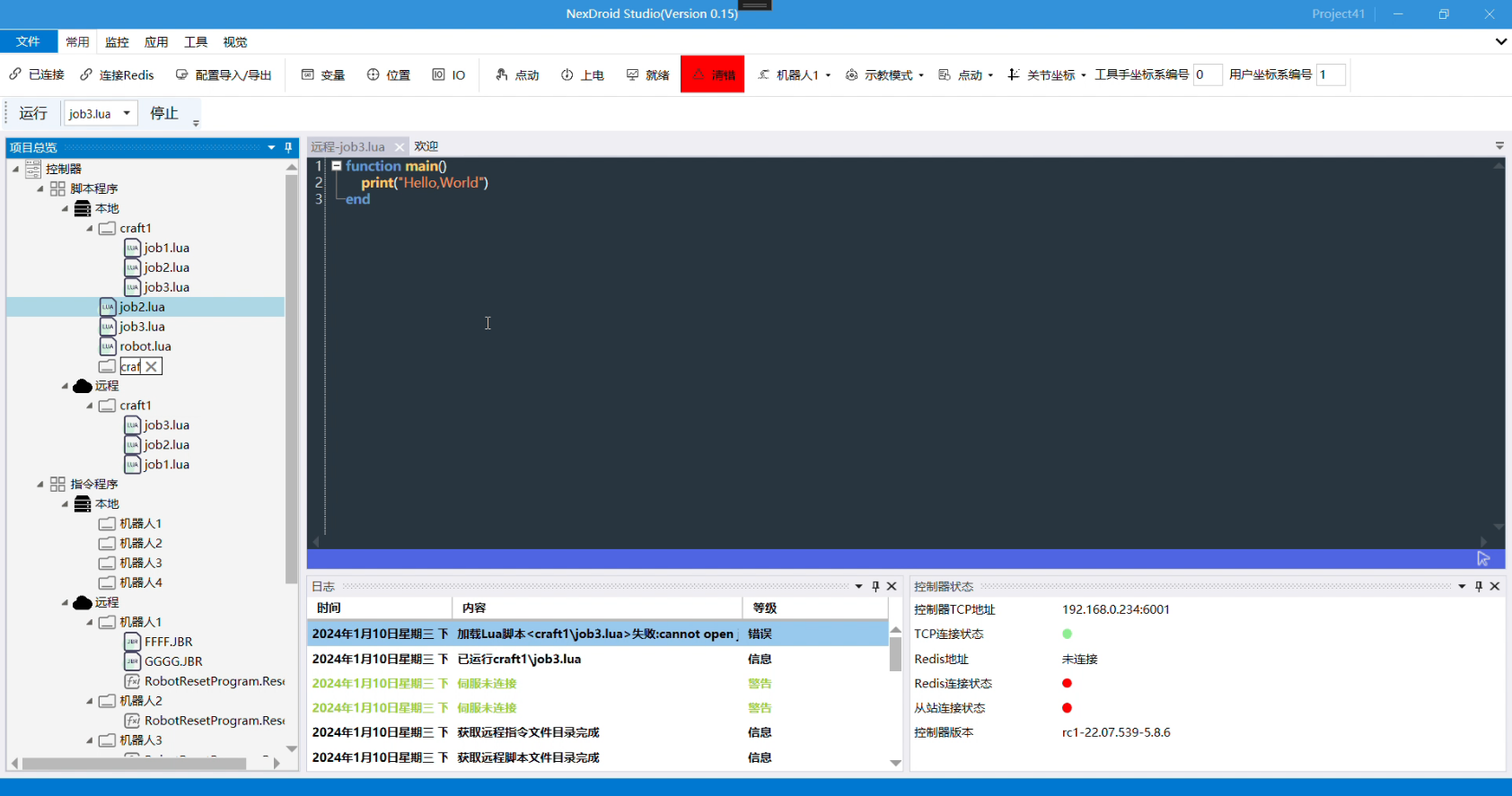
NexDroid Studio includes robot management tools, a programming environment, debugging tools, a secondary development platform, and an industrial Internet platform. It provides local and remote program file management and integrates language servers for Lua, JBR, and more, delivering efficient syntax and lexical analysis, code completion, and highlighting. It also integrates Copilot for AI-based code generation. For the convenience of debugging engineers, NexDroid Studio integrates debugging tools such as an oscilloscope, command line, remote file management, ENI editing, and virtual simulation.
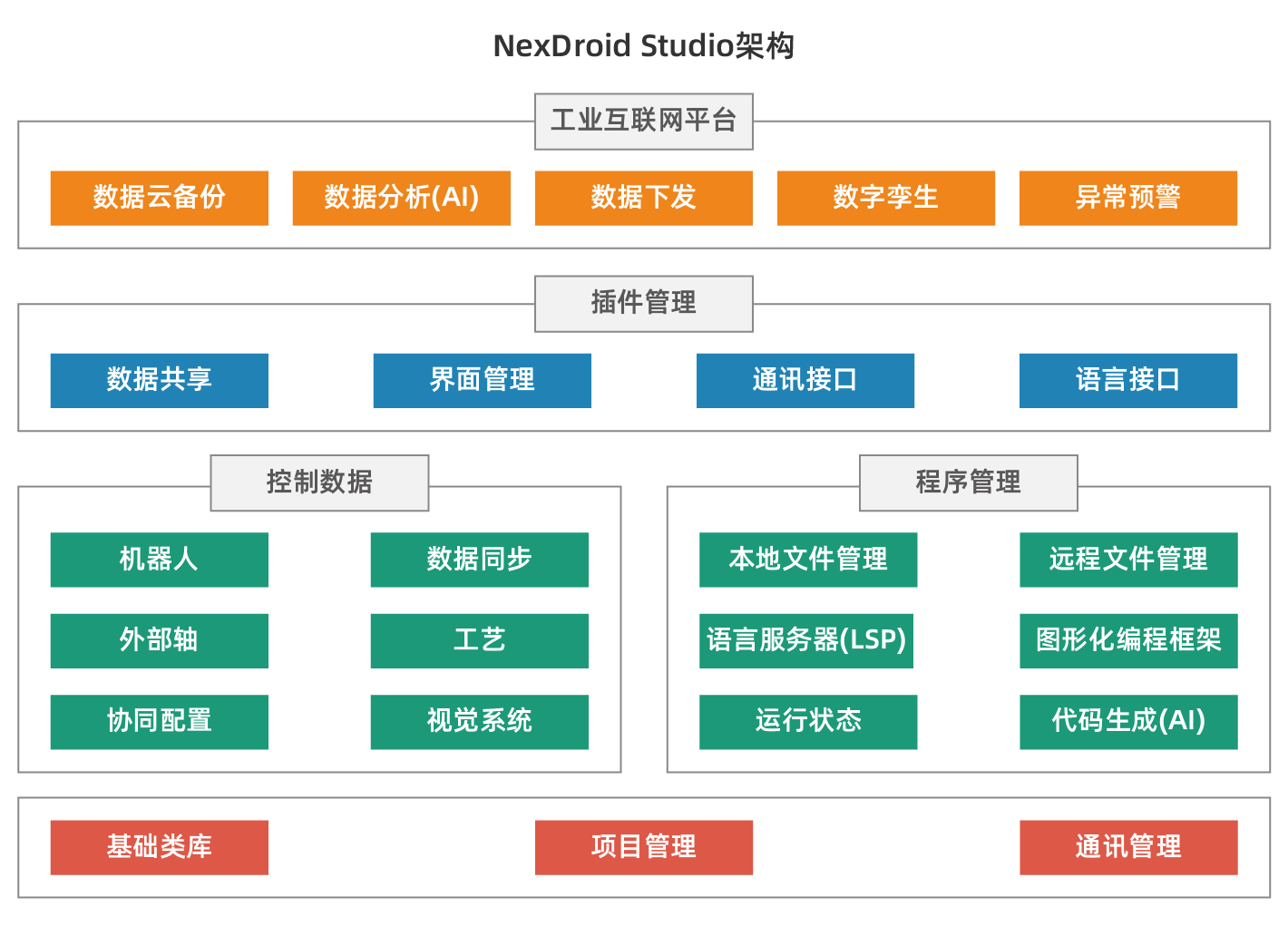
Industrial Internet Platform
The iNexBot Industrial Internet Platform provides industrial data management, AI training, predictive maintenance, and production process improvement capabilities. The NexDroid Studio Industrial Internet Platform can back up local control data and running programs to the cloud and push them to connected controllers. The digital twin system faithfully reproduces the operating status of physical equipment. Leveraging powerful cloud servers, developers can add their own operators to analyze cloud data and use the analysis results to provide early warning of abnormal conditions.
NexDroid 2.0
NexDroid 2.0 targets the robot and general motion control markets. It includes new hardware, new algorithms, an IDE platform, integrated vision-control technology, and AI capabilities.
Algorithm Optimization
Optimized Interpolation, Smooth Transition, and Short-Segment Algorithms
- Adds new smooth transition modes: time-based and distance-based transitions;
- Adopts a new smoothing algorithm ensuring G3 continuity of curves;
- Builds a constraint model encompassing trajectory error, velocity, acceleration, and jerk constraints on top of smooth transitions, performing look-ahead planning for short-segment trajectories within the constraint model to improve operating efficiency.
Slow Passage Through Singularity Regions
- Mathematically: a singular pose of the robotic arm means the Jacobian matrix is no longer full rank;
- In practice: infinitely many solutions exist, and the controller may attempt to rotate joints 4 and 6 through large angles instantaneously;
- Solution: detect singularity locations in advance, limit joint speeds, and pass slowly through singularity regions.
Controller Hardware Upgrades
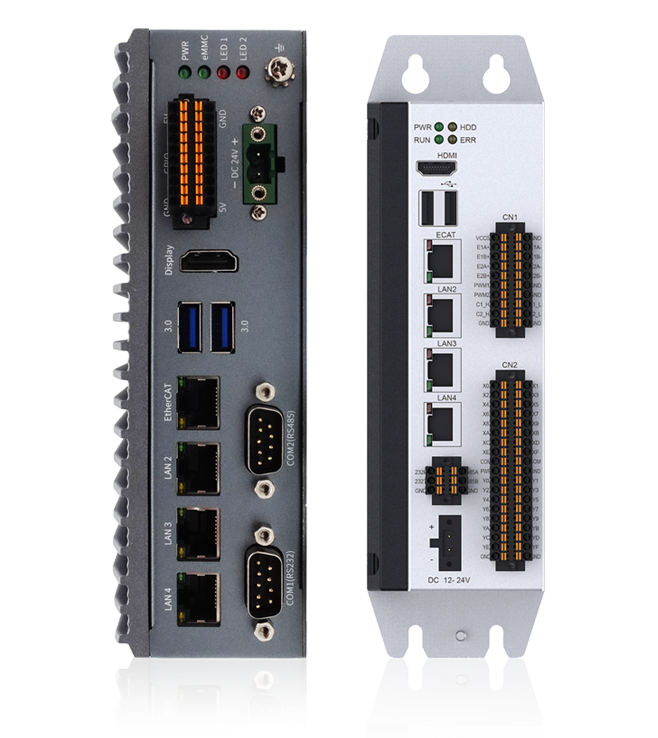
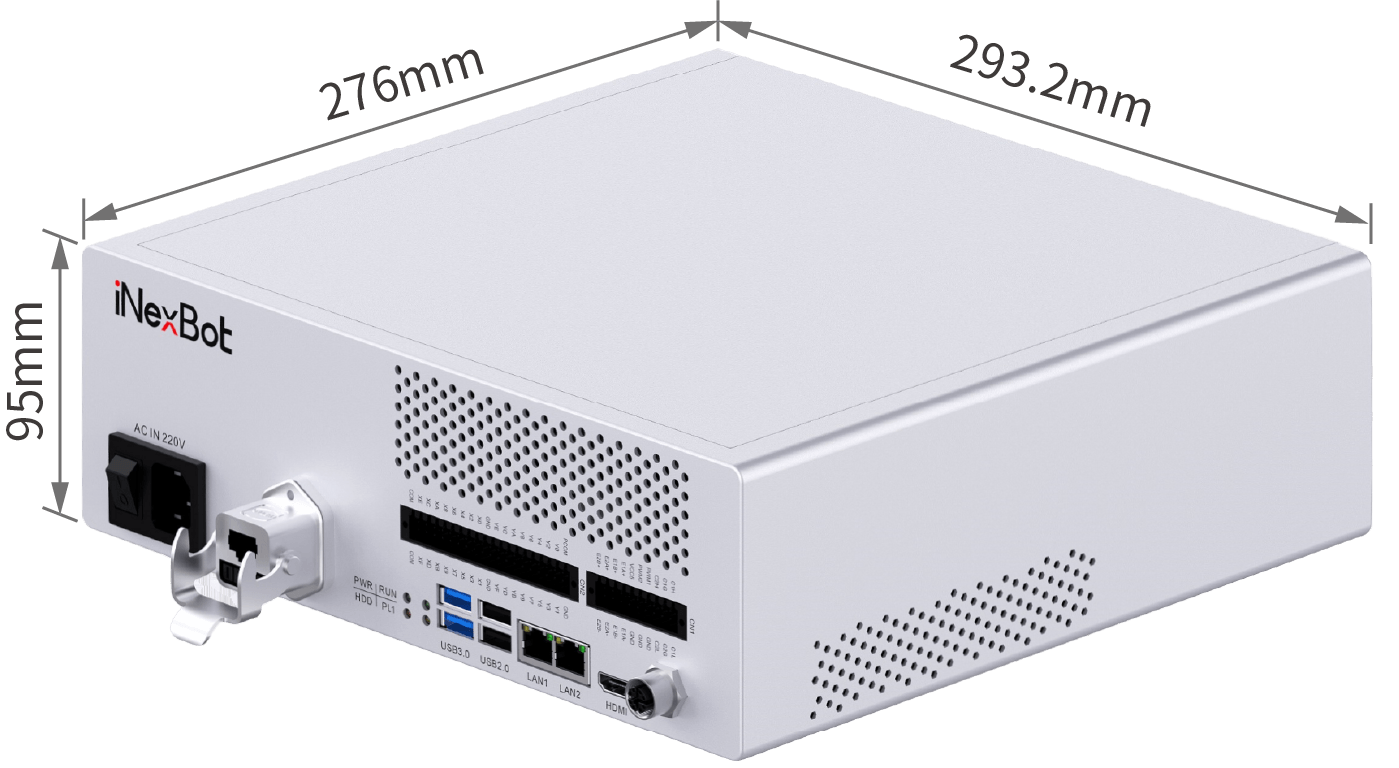
NexDroid 2.0 is paired with the new C1200 and C1201 controllers. The CPU has been upgraded from the J1900 to the J6412, tripling overall computing performance and expanding from 24 to 64 synchronized motion axes. The multi-port network design simplifies field wiring by unifying the interfaces for devices such as cameras and PLCs, replacing the previous industrial switch solution. The built-in supercapacitor UPS module effectively solves the problems of hardware damage and data loss caused by unplanned power outages in industrial environments. A data recovery function restores the operating logic from before the outage, ensuring uninterrupted production on site. The C1201 additionally offers a rich set of peripheral interfaces and uses an x86 + FPGA architecture to ensure high-speed I/O output. Furthermore, with PWM/CAN interfaces, the C1201 can be applied in more complex process scenarios such as laser welding and cutting.
Drive-Control Integrated Cabinet 2.0
Provides multiple interfaces including EtherNet, RS485/232, and EXTENC, and comes with an onboard I/O module offering 16 outputs and 24 inputs for easy customer customization. Rated current per axis reaches 9 A — small in size but mighty in power, driving motors up to 1.5 kW and supporting a wide range of mainstream motor brands. Modular design: easy to maintain, upgrade, and expand. Size optimization: 21% smaller than the previous generation cabinet, weighing only 7 kg. Board-to-board connections reduce the number of internal cables from 30 to 10, improving stability. A single network cable is all that's needed to commission the robot and servos, improving efficiency.
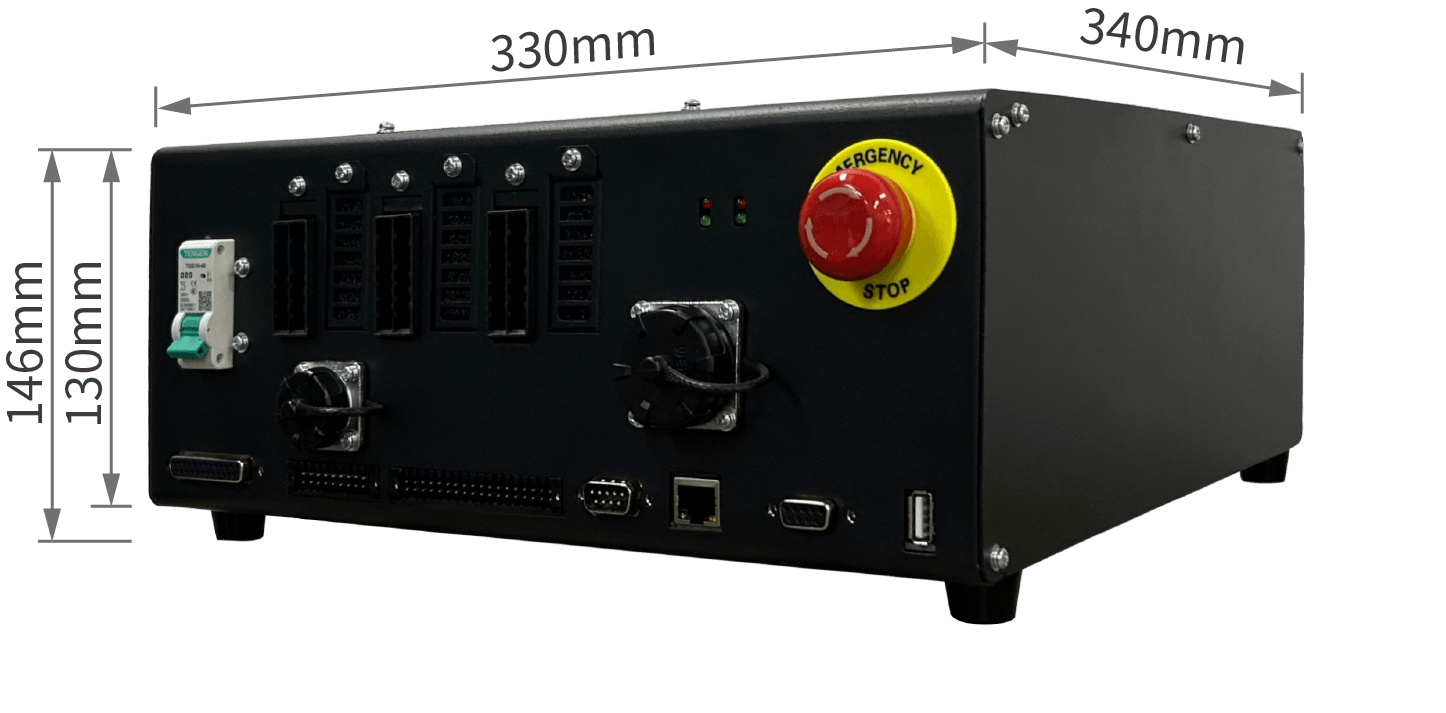
Xingchen No.1 Collaborative Control Cabinet
- Built-in 48 V power output (1500 W)
- Complies with safety standards
- Standard aviation connectors
- Supports EtherCAT expansion axes
- Supports TCP/IP
- IP65 splash-proof
Process Improvements
Perfect Multi-Layer, Multi-Pass Welding
Supports custom trajectory offsets, retraction, push angle, tilt angle, and more, with adaptive tracking.
One-Controller-Multiple-Welders
Connects up to four welding machines simultaneously.
On-the-Fly Vision (Flying Photography)
- Eye-in-hand: the camera is mounted on the tool flange for on-the-fly positioning;
- Eye-to-hand: the camera is fixed along the motion path of the target object, enabling high-speed on-the-fly positioning;
- Positioning accuracy within 0.2 mm.
Conveyor Tracking
- Uses a dynamic tracking synchronization algorithm: dynamic synchronization suited to high-speed, high-precision tracking scenarios;
- One robot, multiple belts: a single robot intelligently handles multiple lines, improving efficiency;
- Multi-robot coordination: high-speed dynamic sorting by coordinated robots, mainly applied to fast sorting and packaging in industries such as food and pharmaceuticals for higher efficiency;
- Multi-tool switching: tools can be switched freely during tracking to grasp multiple targets simultaneously.
Integrated Vision and Control Technology
Embeds vision software directly into the control system.